Bo's Photo_1
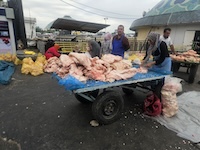
Photo_2
Photo_3
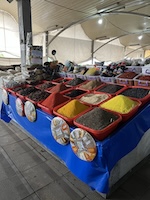
Photo_4
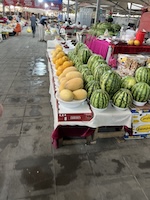
Photo_5
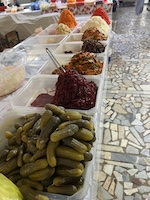
Photo_6
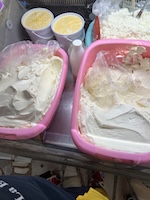
Photo_7
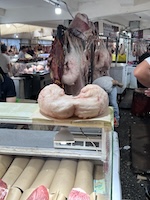
Photo_8
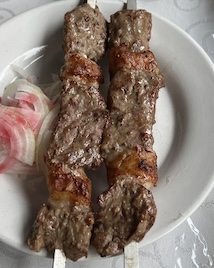
Photo_9
Click photos to enlarge.
|
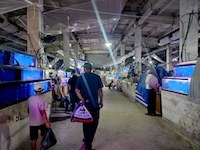
The two bazaars we went to in Tashkent are unlike anything we’ve ever seen! They sell literally anything you could imagine. The Chorsu Bazaar, which is near our hotel, is mainly food based and has less of the hardware and knick knacks. We went there at about 8am and it seemed like that was prime meat market time. Probably because it was quite cool compared to mid day. Our introduction to the market was the “fat department.” We rounded a corner and there were tables, carts, and tarps on the ground heaped with chunks of pure fat. There were people dicing the fat as well as cleaning sections of what I believe is called “caul fat,” it’s the visceral fat that surrounds the kidneys and other innards. It’s supposed to be a bit of a delicacy. The asphalt was extremely slippery due to the fat! Inside there was also a lot of loose meat everywhere but also sections for pickles, produce, dairy products etc. It doesn’t seem like they eat a lot of cheese here and the main dairy products are yogurt and sour cream. As you can see it’s much, much thicker than what we’re used to. We got some apricots, bread, pickles, and sour cream for breakfast at the hotel. |
|
Didn’t really see much beef in the market though. I’m not sure if they do a lot with sheep milk. There is an alcoholic fermented horse milk traditional drink though. We have yet to see it but will probably have to try some if we do just out of curiosity. I’m not sure if these sheep have good wool, I think probably not cause they’re bred for such a hot climate. Though it does get cold in the winter I guess. Weaving is definitely big though. There is a big silk tradition as well as cotton. The Soviet Union started a cotton growing industry here and it’s still the 4th or 5th biggest cotton grower in the world. Cotton uses a lot of water though so the cotton industry caused the Aral Sea to dry up unfortunately. |
| Oh yeah re:the fat. I think traditionally sheep fat would be the primary cooking fat. It’s definitely the fat used to cook plov. A lot of meat kebabs are made with thick pieces of fat between them to flavor and moisten the meat (we had some for lunch - pictured). The sheep breed they have here is called the “fat tailed sheep” and has large fat reserves in its rear end that functions like a camel’s hump since this region is so arid. So the sheep carcasses in that one photo are all fat-tailed sheep and the big hunk of fat in the foreground is one of the “tails.” |
|
There was a section with kittens and puppies too, and we didn’t go to the bird section but we heard it. It sounded like it had poultry as well as pets. We saw a few people who had cages of live pigeons and a couple live roosters as well a few people who had cages with parakeet type birds as well. |
|
Bo's Photo_1 |
Photo_2 |
Photo_3 |
|
Photo_4 |
Photo_5 |
Photo_6 |
|
Photo_7 |
Photo_8 |
Photo_9 |