|
|
|
In early spring, when the mud flats begin to warm, the crabs
will resurface and begin to forage and spawn as they have for eons.
Crabs spend a good amount time on the bottom scavenging up a
meal. Many crabs, as well as the misnamed horseshoe crab who is more closely related to ticks,spiders and scorpions than crabs, spawn on the beach or right
or right where water and beach meet. Some crabs are also
found drifting from one place to another, after all, it is much
faster than crawling across an entire bay. Juvenile and pre juvenile
crabs also drift out of the back bay on new and full moons when the tides are highest. The flies
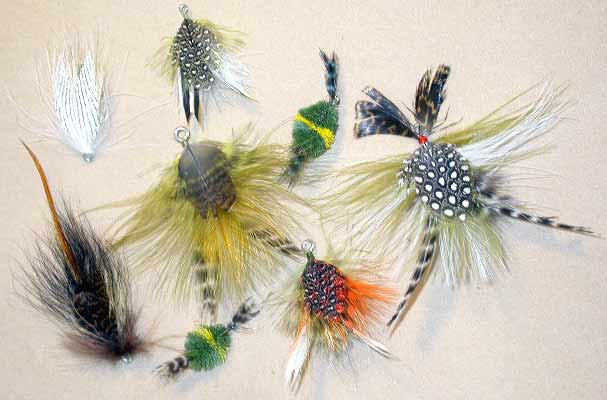
below are all unweighted, though they can be easily weighted by adding
some lead or tungsten wire to the shank, and are considered swimmers
save the two spun deer hair flies that float on the or in the
surface. These flies should all be dead drifted and constantly
taking out any slack in the line. The takes will be gentle
and if there is any slack in he line, the hits will go unnoticed. When using a swimming crab, ask this
question: where in the water column are the crabs? If there
are no takes in the top one or two feet, then add one or two split shot
or loop in a foot or two lead core to get the fly down to the lower one
or two feet. Keeping the weight on the line will bring down the fly
without imparting a jigging action. Jigging action does not
resemble the way a crab swims or drifts. I am not going to state that crabs are found
swimming only at night because I have seen big and little crabs
swimming during the day. However, their appearance is far greater at
night and the stripers are hunting at night closer both to shore and to
the surface to make these mainly night fishing flies. I will make
one exception for flats with strong current during the day. Since boat
traffic is limited in these areas the stripers are around and crabs
will be swept along in the strong current. These patterns are in one way or another
based on the General Practitioner's construction. There are
numerous layers and collars of feather of all types, including guinnea
hen, marabou, grouse, golden pheasant breast feathers, silver pheasant
and saddle hackle. Some use coyote tail, claws are made from golden
pheasant or hen hackle. Some have seal dubbed on the shank. |
|