Blah, blah, blah!
Last night, I was musing on how to treat Paul Ryan’s phony op at a charity soup kitchen.
Then, I watched Jon Stewart opened up a can of righteous whup-ass on him, and I decided to be lazy.
Enjoy.
Last night, I was musing on how to treat Paul Ryan’s phony op at a charity soup kitchen.
Then, I watched Jon Stewart opened up a can of righteous whup-ass on him, and I decided to be lazy.
Enjoy.
I don’t think that Reagan’s former budget director finds Mitts business experience particularly meritorious:
Bain Capital is a product of the Great Deformation. It has garnered fabulous winnings through leveraged speculation in financial markets that have been perverted and deformed by decades of money printing and Wall Street coddling by the Fed. So Bain’s billions of profits were not rewards for capitalist creation; they were mainly windfalls collected from gambling in markets that were rigged to rise.
Nevertheless, Mitt Romney claims that his essential qualification to be president is grounded in his 15 years as head of Bain Capital, from 1984 through early 1999. According to the campaign’s narrative, it was then that he became immersed in the toils of business enterprise, learning along the way the true secrets of how to grow the economy and create jobs. The fact that Bain’s returns reputedly averaged more than 50 percent annually during this period is purportedly proof of the case—real-world validation that Romney not only was a striking business success but also has been uniquely trained and seasoned for the task of restarting the nation’s sputtering engines of capitalism.
Except Mitt Romney was not a businessman; he was a master financial speculator who bought, sold, flipped, and stripped businesses. He did not build enterprises the old-fashioned way—out of inspiration, perspiration, and a long slog in the free market fostering a new product, service, or process of production. Instead, he spent his 15 years raising debt in prodigious amounts on Wall Street so that Bain could purchase the pots and pans and castoffs of corporate America, leverage them to the hilt, gussy them up as reborn “roll-ups,” and then deliver them back to Wall Street for resale—the faster the better.
It’s pretty long, but it’s well worth the read, and it is positively devastating.
I don’t think that Obama has gained any intestinal fortitude, but he’s certainly had some coffee that was not decaffinated.
He’s said some variant of “that’s simply not true” a number of times.

H/t JR at the Stellarparthenon BBS.
I guess you file this under, “Why little Timmy didn’t get a Li’l Tyke fuel refinery for the holidays.”
On the was back from the Ashland Shakespeare festival, we decided to stop at Crater Lake. (It was beautiful, pix to follow)
Unfortunately, as we got to the rim of the caldera, the low fuel warning
went off.
Unfortunately, it’s HARD to find a gas station in the middle of a National Park.
We FINALLY pulled up to a gas station in Dry Creek (I’m not joking here), Oregon.
Unfortunately, their pumps were dry, and the next nearest station was 27 miles away!
The guy at the gas station, Pablo, was very apologetic, and called his sister to see if sure had a Jerry can of gasoline.
I looked around, and communed with my inner McGiver.
I saw some camping supplies, and looked to see of the had any Coleman fuel (also called white gas), which is gasoline without any additives to boost octane our detergent additives.
No such luck.
I checked the automotive section, and there were two bottles of STP, which could be used to run a cart in a pinch, as long as the engine was warm, but that was about a pint, which wasn’t enough.
While we were waiting for his sister to call back, Pablo looked in in the back shed, and found an old can of Coleman fuel about 3/4 full.
So I added the Coleman fuel, and the two cans of STP, and we managed to coast 28 into Idleyld and pick up some fuel.
One of the reasons to add the STP is that, on addition to dealing with potential contaminants in the old fuel, it’s that out had a lot of methanol in it, and so will to boost the fuel’s octane.
So we made it to the airport on time, (I would have posted it then, but this is when the plane started boarding, and then, after flying overnight, we all slept), dropped off the car, and checked in.
Crater Lake pix to follow.
Posted via mobile.

H/t DC at the Stellar Parthenon BBS.
Busy week. Three this Friday.
So, here is the graph pr0n with last years numbers for comparison (FDIC only):


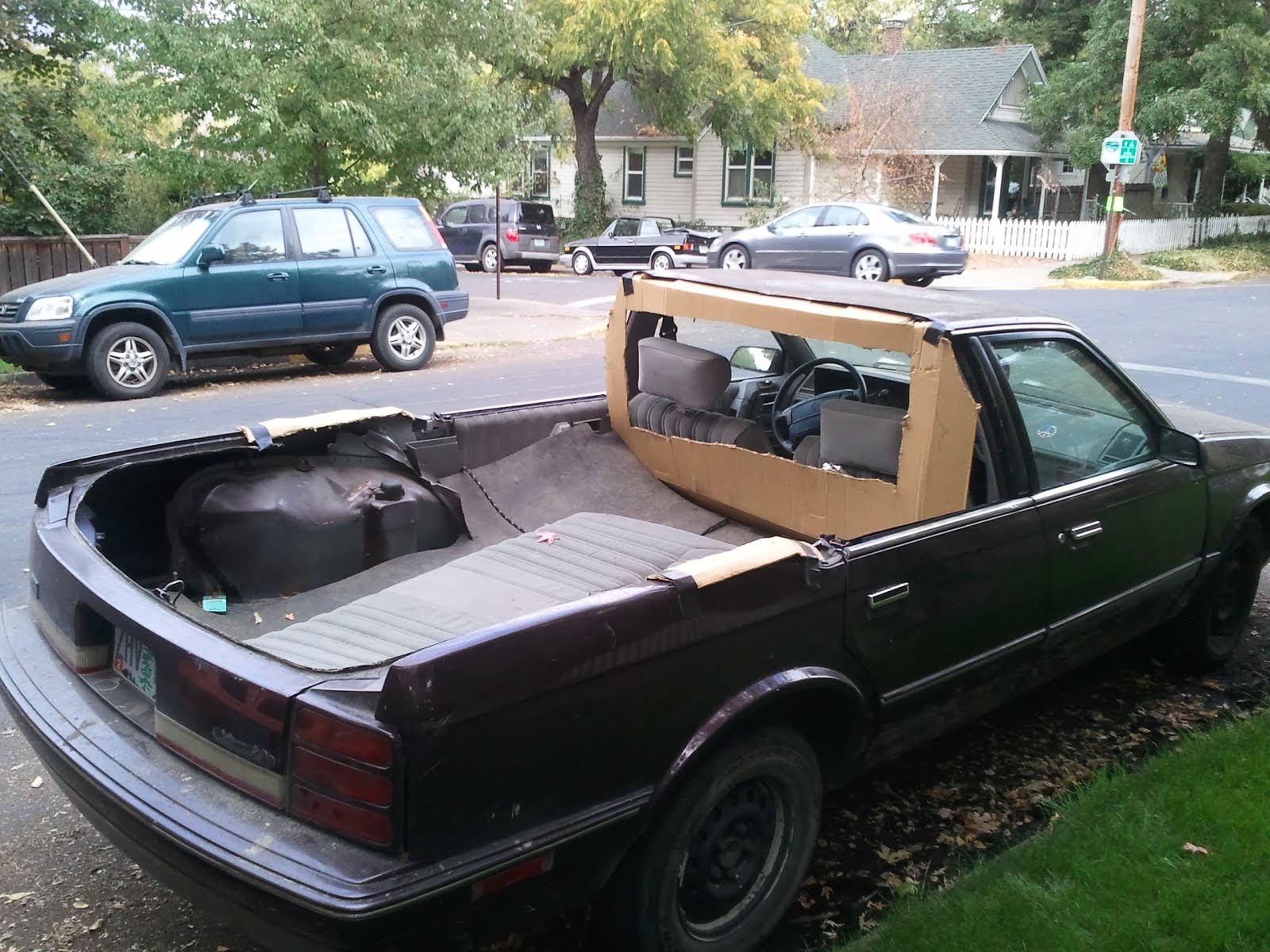
I don’t have everything to add, except to note that what you see IS cardboard, but enjoy the pix.
Posted via mobile.


The trip was kind of involved.
I neglected to mention that while Sharon and the kids made the flight, I did not.
I had to run back home, because Natalie forgot to bring her back pack, which had her inhaler, so I had to run homeand get it, (Natale will be on the hook for the taxi fare).
What I didn’t mention yesterday was that I DIDN’T make the flight, so I had to fly on another flight.
So we hit the car rental agency late, and then had a 5 hour drive to Ashland.
We got I late last night, at least by our Eastern Time body clocks, and had been up since 4 am.
Tonight, we have singer at a brew pub, and then we see a play.
Posted via mobile.

H/T DC at the Stellar Parthenon BBS.
Heading to Oregon for my step-mom’s 80th birthday.
We are all heading down to Ashland, Oregon to celebrate, and to watch Shakespeare.
Just about to get on the plane.
So, San Francisco, a place with lots of LGBT people, and decent mass transit has gotten a new archbishop who is homophobic and a drunk driver:
The Catholic Church on Thursday installed Salvatore Cordileone, a leader in the fight against same-sex marriage, as archbishop of the Archdiocese of San Francisco.
Following his installation as the religious leader of more than 500,000 Catholics in the largely gay-friendly Bay Area, Cordileone, 56, delivered a sermon and spoke about his recent arrest after failing a sobriety test at a police checkpoint.
“God has always had a way of putting me in my place,” he said. “With the last episode in my life, God has outdone Himself.”
Cordileone spent about 11 hours in a San Diego jail cell in August after he was arrested on suspicion of drunken driving. On Monday, he pleaded guilty to driving with alcohol in his system, said Gina Coburn, spokeswoman for the San Diego City Attorney.
Cordileone has been particularly outspoken in Church opposition to same-sex matrimony as chairman of the U.S. Conference of Catholic Bishops Subcommittee for the Promotion and Defense of Marriage, a role that has put him at odds with many Bay Area Catholics.
He also led Church support for the 2008 voter-approved California state constitutional amendment, Proposition 8, that banned gay marriage.
Seriously, I’m kind of surprised.
This is an archbishop, so you can be pretty sure that the entire chain of command, up to and including the Pope, had to sign off on this, and they had to know what it means.
I would have thought that they would be too busy covering up pedophile priests to take a break to piss on the LGBT community.
I guess that they multitask well.
Yes, this is a phrase that I did not expect to say, but the fact that Pakistani law enforcement is beginning to enforce notorious blasphemy laws against Islamic extremists too:
Most people have heard of Pakistan’s blasphemy law. Carrying the death penalty of life imprisonment for anyone who criticises the Prophet Muhammed or the Qur’an, it gained renewed international scrutiny this year after Rimsha Masih, a young Christian girl apparently suffering from Down’s Syndrome, was arrested in Islamabad. She was subsequently freed and a Muslim cleric now stands accused of fabricating evidence against her.
………
But could that be changing? Here in Karachi, protests against the anti-Islam film that have caused rallies across the Muslim world turned violent. One of the incidents on 21 September was an attack on a Hindu Temple on the outskirts of the city. Protesters attacked the Sri Krishna Ram temple, breaking religious statues, tearing up the Bhagavad Gita (the holy book), and assaulting the temple’s caretaker.
Community leaders took the unusual step of going to the police, who have announced that the case against nine attackers has been registered under Section 295-A of the blasphemy laws. This lesser known section, which covers the “outraging of religious feelings”, can apply to any religion and carries a fine or imprisonment of up to 10 years.
Of course, this case does not represent a sea-change in attitudes just yet. For a start, no one has been charged, or even arrested. But it was a positive move by local police, if only because Pakistan’s religious minorities are frequently too frightened to speak out at all. Numbering about four per cent of the population, this small minority of Christians, Hindus and Islamic sects such as the Ahmadis (regarded as non-Muslims) translates to nearly ten million people, the equivalent of the population of Tunisia. It is not an insignificant number.
While this is not the same as the death penalty for defaming the Mohammad or Islam, I am tickled pink that the same people who are this law’s most vociferous supporters are now being targeted by this same law.
Lindsay Beyerstein has a very interesting analysis of Henry Wiencek’s essay The Dark Side of Thomas Jefferson in Smithsonian magazine.
Some of the facts I knew, like the fact that George Washington made far more diligent efforts to free his slaves after his death than Thomas Jefferson ever did.
What I didn’t know, and now do know, is that he kept detailed records of slave beatings, and that Monticello’s primary cash crop was slaves:
The most disturbing revelation in this story is that Jefferson didn’t just keep slaves to work on his farm. He wrote that his real business model was “the increase” of his female slaves. He was raising human beings to be auctioned off like livestock. Jefferson calculated that the children of his slaves brought in a reliable 4% return per annum. It was a great business, he recommended it to everyone.
In the movies, we know someone’s a benevolent slave-holder if they “don’t break up families.” Well, those are the movies.
The revisionist fiction is that slavery was an unprofitable institution by Jefferson’s time. Wiencek explains how Jefferson breathed new economic life into bonded servitude by devising profitable models for slave labor in factories and wheat fields as tobacco farming was being phased out.
Jefferson spurned a golden opportunity to walk away from the slave trade. An old revolutionary comrade willed Jefferson a small fortune to pay for his slaves’ release and education, but Jefferson refused, even though he was the executor of the will.
George Washington freed his slaves upon his death, but Jefferson didn’t even go that far.
Some defenders will say that it’s unfair to judge Jefferson by the standards of our day, but the fact is, Jefferson fell short of the standards of his own time. He knew it was wrong to own slaves. In fact, his writings helped to set the standards of his day.
This explains much about the political culture of Virginia.
I had always wondered how the progressive (for his day) politics of Thomas Jefferson’s Virginia became the reactionary bigotry one sees leading up to (and during, and a long time after) the Civil War.
It now appears that the Jefferson’s progressive positions, at least insofar as slavery was concerned, was nothing more than a mirage, which means that the change in Virginia’s political culture was far less extreme than one is commonly led to believe.
David Axe talks to a former USAF general who says that his career was destroyed, and his retirement delayed in an attempt to cover up his report that was critical of the V-22 Osprey:
Don Harvel thought he was cruising to a well-deserved retirement after 35 years flying cargo planes for the U.S. Air Force. Then in the spring of 2010 he was tapped to investigate the fatal crash of a high-tech Air Force tiltrotor aircraft – and everything changed.
What Harvel discovered about the controversial hybrid aircraft drew him into a battle of wills with his superiors at Air Force Special Operations Command. Harvel, then a brigadier general, uncovered evidence of mechanical problems — and resulting safety woes — in the V-22 Osprey, which takes off like a helicopter and flies like an airplane. These are issues the Pentagon has been eager to downplay. So when Harvel refused to alter his findings to match the Defense Department’s expectations, he knew that was the final chapter of his decades-long military service. Harvel’s long-planned retirement was held up for more than two years, effectively silencing him during a troubling chapter in the Osprey’s often-troubled history.
“I turned [my report] in and I knew that my career was done,” Harvel says.
………
But the stats reflect altered and miscategorized data. Engine fires clearly costing millions of dollars to fix were downgraded in the paperwork. One malfunction that resulted in a V-22 accidentally taking off uncommanded before crashing to the ground was labeled a ground incident and left off the record. Even leaving out the 1991-2000 crashes, the Osprey’s crash rate before this year’s accidents was roughly double the officially stated figure, making the V-22 no safer than the Marines’ conventional helicopters and far, far more dangerous than its fixed-wing cargo planes.
And that’s mostly due to inadequate testing, Harvel claims. “In their hurry to get this thing painted in a positive light for Congress, some things are coming back to haunt them,” he says of the V-22′s supporters.
We need to understand that the military establishment of the United States is completely captured by the defense industry, and this does not serve either our military needs or the interest of the taxpayers.
No bank failures tonight, but we did have the a credit union, the 10th of the year, El Paso Federal Credit Union in El Paso, TX.
Here is the full NCUA list for the year.
Over at Ars Technica, Timothy Lee has a couple of very good articles on what was wrong with our patent system.
The first is about how the Federal Circuit Appeals Court, which set up to be the sole appellate court for patent matters, and how is has gone completely off the rails ). He calls it a rogue court:
“It is not common in the life of the law in America for a lower court and a major segment of its bar to take on the nation’s highest court, effectively reversing some major precedents or at least substantially mitigating their impact,” notes Steven Flanders in a recent history of the patent court. “Yet this was done.”
The Federal Circuit, he said, also took on “the quieter and subtler effort to re-educate trial judges throughout the judiciary, to make them friendlier to patent-holders (or at least to the system of patents) as well.” (Flanders, it should be noted, is an avowed supporter of the Federal Circuit and its efforts to reshape patent law).
This dismissive attitude toward Supreme Court precedents apparently survives to this day among patent lawyers. In the wake of this year’s decision limiting patents on the practice of medicine, patent attorney Gene Quinn wondered, “How long will it take the Federal Circuit to overrule this inexplicable nonsense?” Obviously, the Federal Circuit can’t “overrule” a Supreme Court decision. But with enough persistence, it can, and often does, subvert the principles enunciated by the nation’s highest court. And when it does so, it almost always works in the direction of making patents easier to obtain and enforce.
It’s a good description of how and why our patent system has gone nuts.
He gives a good summary of how we got there, and why the Supreme court is increasingly willing (perhaps eager) to bitch slap this court.
My only complaint is that he did not cover the seminal patent trolling case, NTP v. RIM (Blackberry), which was crucial in making both SCOTUS, and increasingly larger segments of the “Very Serious People”. (You are seeing this in legislation about patents floating around Congress)
As some background, when NTP got an injunction against RIM, they asked RIM to cut off all commercial and residential users in the United States, and RIM’s response was that this wasn’t possible, so they would cut off all their users, including the government.
This would mean is that people like Congressmen, their aides, and Supreme Court Justices and their clerks would lose access to their “Crackberries”.
As a result, the consequences of patent trolling suddenly got real for them, and they realized that the Federal Circuit Appeals Court is full of a bunch of extremist nutcases. (I’m sure that there is an obscure legal term for this in Latin, but I’m an engineer, not a lawyer, dammit.*)
I emailed him about this and he noted that he had included a number of injunctions from patent trolls, including the Blackberry case, but ended up on the cutting room floor.
Additionally, he writes a good article on the International Trade Commission, which routinely prevents products from being imported on the basis of (frequently bogus) patent claims:
If you follow the smartphone patent wars, you’ve probably heard of the International Trade Commission (ITC), which seems to get dragged into every high-profile patent dispute over the devices. Just this month, Motorola asked the ITC to ban various Apple products from the US, and the ITC separately ruled that Apple doesn’t infringe some Samsung patents. But how did this obscure Washington bureaucracy become a major front in the patent wars?
The ITC has the authority to police “unfair methods of competition” by importers, a phrase interpreted to include patent infringement. Because virtually all mobile devices are manufactured overseas, getting the ITC to ban the importation of a device can be just as effective as getting an injunction from a regular court.
A new study from the Cato Institute, a libertarian think tank, suggests that the ITC’s patent-enforcement process is tilted in favor of patent holders—and especially patent trolls. The author, K. William Watson, argues that the inherently discriminatory nature of ITC patent enforcement—ITC cases can only be brought against imported products, not domestically produced ones—violates America’s obligations under World Trade Organization rules not to discriminate against foreign products. He says Congress should eliminate the provision of trade law, known as Section 337, that gives the ITC authority over patent issues.
Go read both articles.
*I LOVE IT when I get to go all Doctor McCoy!!!
And I really don’t intend to.
That being said, I did watch Jon Stewart, who summed it up when he said that, “Rmoney won, “even though he was lying his ass off the entire night.”
The Federal Appeals court of the 6th circuit has ruled that Ohio must provide early voting in the last days before the election:
President Barack Obama’s campaign won a federal appeals court ruling that requires every citizen in Ohio be offered the same number of early voting days as members of the U.S. military.
The U.S. Court of Appeals in Cincinnati today rejected a bid by Ohio’s secretary of state and attorney general, both Republicans, to overturn a lower-court order that blocked a law ending pre-election voting three days earlier for civilians than for service-members and overseas citizens.
“There is no relevant distinction between the two groups,” the three-judge panel said. “The state argues that military voters need extra early voting time because they could be suddenly deployed. But any voter could be suddenly called away and prevented from voting on Election Day.”
Ohio controls 18 of the 270 Electoral College votes Obama or his challenger, Mitt Romney, needs to win the presidency and no Republican has won the office without carrying the state. Obama took Ohio with 51.5 percent of the vote in 2008 when more than 100,000 people, out of a total of 5.77 million, cast ballots in the last three days, according to today’s opinion.
Theoretically, it seems to me that the ‘Phants could shut down the early voting if they were to strip early voting rights from active duty servicemen, but I’m inclined to believe that the the political repercussions of doing this would be too much for them to try this.

Seen on Facebook