Category: Defense Procurement

News Flash, Stealth Ain’t Rocket Science

There are reports that Japan is considering development of a stealth fighter of their own.

Truth be told, the information necessary for reduced radar signatures has been available to the general public, at least those who can speak Russian, for about 40 years now.

The “secrets” of stealth derived from a Russian physics paper that allowed one to analytically determine the radar cross section of surfaces.

That being said, this is not really about Japan developing a stealth fighter. It’s about Japan getting the F-22.

Export of the F-22 is forbidden by law, but Japan wants to buy some so they are starting this research, “in the hope it will spur the United States to review a ban on selling F-22 fighters”.

Faith Based Missile Defense

I’ve just finished reading an articleabout the Congressional Research Service (CRS) on the travails of the Airborne Laser (ABL).

In a word, it’s a mess.

We have, “The Missile Defense Agency (MDA) dropped the traditional requirements-setting process in favor of a “capabilities-based” approach, intended to more quickly field a system capable of responding to some, if not all, of the current ballistic missile threats, according to the report.”

So basically, they will field this against something like an Atlas Class liquid fueled rocket, which derives structural integrity from internal pressure and a very thin walled skin.

Problem is that only the Atlas ever used this. Liquid rockets with conventional structures, like the Titan and the Soviet systems are more robust, and can be hardened to become mroe robust. Solid fueled rockets are more robust still.

Moving to those does not require anything but a bit of time and money…After it’s not…OK, it is rocket science, but it’s not hard rocket science.

Additional problems:

  • “The total ABL program cost cannot be given or estimated because of the acquisition strategy adopted by MDA for missile defense”. This is almost certainly a deliberate attempt to shield a program over budget.
  • “Nor has the final system architecture been identified, meaning that the total number of ABL aircraft to be procured has not been determined.”
  • “ABL will be a highly visible asset. It is very large, and will be escorted by fighter aircraft. Its high altitude will also help to distinguish it from other wide-body aircraft.”
  • Long in-theater on-station time for the ABL is premised on forward basing. These forward bases would likely not have chemical replenishment capabilities, meaning return flights to the United States if the laser is used.

This is an ill conceived program that has continued through inertia, and the fact that the person who cancels this will likely have their career ended.


White Elephant

Air Force Special Ops Command Looking for Toys

The Air Force Special Operations Command (AFSOC) is looking to use a bomber as its next gunship platform, and it is looking at a significant increase in its air fleet (both subscription required).

I can’t see how this really serves any purpose except to sell the Air Force’s next gen bomber.

The use of something like the Osprey would be a significant increase in operational capabilities, allowing special operations troops to deploy via vertical insertion at greater distances, and to be extracted at greater distances, as opposed to a parachute insertion. This is a significant improvement in capability.

Additionally, the use of a stealthy platform to insert small numbers of troops might be a capability that might be occasionally (very occasionally) useful, and an upgrade to a higher performance airframe for gunships, such as the C-130 J, A400, or An-70 (the latter two would give a higher top speed too) would be an improvement, both in payload/range, and in reliability.

However, the application of a stealthy airframe to the gunship roll is nonsensical. The gunships only operate in conditions of air supremacy where there is no heavy air defense system. Certainly nothing beyond shoulder launched SAMS and light (57mm and less) AAA.

When the gunship is operating, it is orbiting a fixed position, and lighting it up. This is an inherently non-stealthy activity. The additional cost and performance hit for stealth buys you nothing.

My assesment, and I am not alone in this, is that the bulk of future deployments for the military in general will be in peacekeeping/counter insurgency operations, where the high equipment of an Air Force gains very little.

Air operations in Iraq would be much the same with the current fleet of F-15s and F-16s. Adding the F-22 and F-35 to the mix would change nothing. In fact, if a modern F-4 Phantom or F-105 Thud with modern systems would operate in exactly the same way.

The B-2 really gains nothing over the B-52, and the B-1 significantly underperforms both of them, requiring more tanking, and operates at lower altitudes which put it in range of optically guided AAA.

In any foreseeable engagement, the Air Force would achieve air superiority in hours, and air supremacy in days, even if some opposition aircraft (MiG-29, Su-27, Rafale, Typhoon) might nominally have superior air performance, because of superior situational awareness.

Integrated air defense networks will be non-existent when AFSOC deploys gunships, and so a transport would be superior, giving lower operational costs, and greater range/payload than a bomber or bomber derives platform.

More JASSM Shenanigans

Aviation week has an article, USAF Needs A Year to Assess Jassm’s Progress(subscription Required), in which the USAF says that the JASSM needs more time.

….

The Pentagaon will wait until at least spring 2008—a rare yearlong pause—to certify that its newest cruise missile is ready to move forward following myriad technical problems and a 42% failure rate this year.

The Lockheed Martin Joint Air-to-Surface Standoff (Jassm) missile fell under scrutiny again this year after the Air Force informed Congress it had breached cost expectations by more than 25%. USAF and company officials are still trying to assess how high the amount will soar above the current $5.8-billion mark. The program’s goal in the mid-1990s included a $400,000-per-unit charge.

Senior Pentagon officials had been considering terminating Jassm because of the escalating price. The technical problems, including a GPS dropout issue brought on by an interface with the Selective Availability Anti-Spoofing Module (Saasm) in the missile, have only increased the level of scrutiny facing the effort. In recent tests, the GPS problem contributed to three missiles missing targets by nearly 200 ft.

Because of the 25% cost increase, the Nunn-McCurdy law dictates that the Defense Dept. must certify to Congress the program is sound on several points before proceeding. These include: the program is deemed critical for national security; no alternatives providing equal or greater capability exist for equal or lesser cost; new program estimates are reasonable, and management for the program is adequate to control cost.

…..

Meanwhile, Taurus Systems GmbH. is working with its new U.S. partner, Textron, on how to market its KEPD-350 missile to the Pentagon. So far, Germany, Spain, Sweden and South Korea are either purchasing the missile or in discussions. The Taurus pitch for a niche in the U.S. market—offering the German/Swedish KEPD-350 for the hard and deeply buried target set—is already underway. Taurus can penetrate through concrete more than twice as far as Jassm. Some officials in the combatant commands have begun to show an interest in Taurus as a Jassm alternative, according to industry sources.

…..

This is not about making the missile work. This is about Air Force Generals who want to work at Lockheed after they retire.

The system does not work. It’s over budget. There is an alternative. This is throwing a defense contractor a lifeline so that the defense contractor can throw some lucrative consulting or executive gigs to the people supervising the program.

Russia Wants India to Dump Dollars and Use Euros for Future Arms Deals

This is significant. Russia considers the protection of its remaining defense infrastructure to be a crucial part of both its economy and its military capabilities. The fact that it is willing to risk alienating India over this in the midst of a huge competition to replace the IAF’s MiG 21s, indicates that they have a very real concern about the dollar crashing.

A Euro Exchange for India’s Russian Accounts (Subscription Required)
Aviation Week & Space Technology
07/23/2007, page 36

Neelam Mathews
New Delhi

India considers shift from the dollar for its Russian military contracts

Printed headline: A Euro Exchange

A fallen dollar has pushed India into a corner on its Russian military contracts.

A recent Russian insistence that India must pay more for defense equipment—how much is not known—to offset the effects of a weaker dollar has unnerved the Indian defense ministry, which already faces demands for an additional $10 billion in procurement.

India, which wants to keep its Russian military purchases on track, has begun studying Russia’s suggestion to convert purchases to the euro. But if it chooses to do so, the bill would be high: The exchange rate is currently nearly $1.38 to €1.

Is this another nail in the dollar’s coffin?

Future Combat Systems NLOS-C Begins Planning for LRIP.

I worked on the program for three years, though not on the NLOS-C.

This variant is the only one I expect to see service service. At the urging of the US Army’s “Artillery Mafia”, this is entering production and service well before any other vehicles as a kind of “block zero”.

This was the deal cut when the Crusader self propelled howitzer was canned.

Personally, I think that the lightweight XM777 towed 155mm howitzer is a better bet, since it’s light enough (it weighs less than a typical 105mm howitzer) to be airlifted.

FCS Industry Team to Initiate Production Planning

ST. LOUIS, July 18, 2007 — Boeing [NYSE: BA] and partner Science Applications International Corporation (SAIC), Lead Systems Integrator for the U.S. Army’s Future Combat Systems (FCS) program, today announced that the Army has authorized planning for FCS low-rate initial production, including long-lead items for the first FCS capability Spin Out and Manned Ground Vehicle (MGV) early production units. The latter is focused on the Non-Line-of-Sight Cannon (NLOS-C) initial production platform, which will be fielded in 2010 according to a Congressional mandate.

“The Army’s notification to proceed with early production planning for Spin Outs and Manned Ground Vehicles is evidence that FCS technologies are maturing according to plan and represents a crucial step toward meeting program production objectives,” said Dennis Muilenburg, vice president-general manager, Boeing Combat Systems, and FCS program manager. “It underscores the significant accomplishments of the entire FCS One Team which continues to perform and is well-positioned to deliver these early life-saving capabilities to our soldiers as quickly as possible.”

Three FCS Spin Outs to the current force will be initiated in two-year increments starting in 2008 when the FCS team delivers the first infusion of capability to the Army Evaluation Task Force (AETF) in Fort Bliss, Texas, for testing. The first, referred to as “Spin Out 1”, consists of equipment and technologies that will provide enhanced situational awareness and communication capabilities for the Current Force through technology insertions to Abrams battle tanks, Bradley Fighting Vehicles and HMMWV vehicles. Spin Out 1 elements include network integration “B” kits consisting of an Integrated Computer System, System-of-Systems Common Operating Environment, Battle Command and Network Management software and communications system including the Joint Tactical Radio System Ground Mobile Radio. Also included are Tactical and Urban Unattended Ground Sensors to provide real-time threat information in complex terrain, and the Non-Line-of-Sight Launch System for remotely controlled precision fires.

A recent Critical Design Review of Spin Out 1 technologies confirmed that they meet design requirements and are ready for integration into current force vehicles and the AETF. Low-rate initial production for Spin Out 1 will support the procurement of 17 Brigade Combat Team sets to be fielded incrementally over a period of seven years, beginning in fiscal year 2008.

FCS MGVs, developed in partnership with BAE Systems and General Dynamics, will provide the Army with a new family of networked vehicles with enhanced armor and protection technology, and next-generation survivability and sustainability features that are required for successful and decisive future battlefield operations. Based on a common chassis, FCS MGVs will be more than 70 percent common, reducing spare parts and logistics costs. The NLOS-C will be the first of the eight MGV variants to be developed and fielded as part of the FCS program. It is designed to provide a networked, extended range precision attack capability against point and area targets in support of FCS Brigade Combat Teams.

Plans call for 18 NLOS-C initial production platforms to be delivered between fiscal years 2010 and 2012 at a rate of six per year, in advance of the Milestone C and low-rate initial production decisions in 2013.

The LSI, in partnership with BAE Systems and General Dynamics, plans to employ various sites for component subassembly, and final vehicle integration, assembly and test activities will be conducted, including Elgin, Okla.; Lima, Ohio; and York, Pa. Once integration and assembly are complete, the NLOS-C vehicles will undergo cannon verification testing at Fort Sill, Okla., then be transferred to Fort Bliss, Texas, and White Sands Missile Range, N.M., for system-of-systems verification testing conducted by the AETF.

India Has Beaten the USA at It’s Own Game, F#$%ed Up Weapons Procurement.

If you think that US defense procurement programs have a problem, you will get a chuckle out of the Indian Arjun MBT.

Indian Army to get 14 Arjun tanks for field trials

The Indian Army has agreed to take 14 indigenously developed main battle tanks (MBT) Arjun for field trials by September 30, it was announced on Monday.

The decision was taken after successful demonstration of all modifications including medium fording or crossing a water body to Defence Minister AK Antony and other senior officials at Avadi in Tamil Nadu where the tank is being built, a defence ministry statement said.

While not officially going on record, the army is known to be extremely unhappy with the Arjun, having listed 14 defects that need to be rectified.

These include a deficient fire control system, inaccuracy of its guns, low speeds in tactical areas – principally deserts – and its inability to operate in temperatures over 50 degrees celsius.

50°C is about 112°F. It’s a temperature that was seen in France during their killer heat wave.

And it appears that this saga will continue.

The Indian Army laid down its qualitative requirement (QR) for the Arjun in 1972. In 1982, the DRDO had announced that the prototype was ready for field trials. However, the tank was publicly unveiled only in 1995.

Arjun was originally meant to be a 40-tonne tank with a 105 mm gun. It has now grown to a 50-tonne vehicle with a 120 mm gun.

Wiki lists it as being a 58.5 tonn vehicle with a crew of 4, so it would be similar to the Leopard II. (It’s about 5 T lighter)

It’s main gun is rifled, which implies some British involvement, as they are only ones staying with rifled main guns.

It uses a hydropneumatic suspension. This probably does not gain much by way of performance, torsion bar seems to match that, but is more efficient space wise, as you don’t have to have a sub floor over the torsion bars, and it can kneel, possibly allowing for very low profile hull down positions.

35 years?????

US Air Force General Guarantees Sweet Retirement Deal with Lockheed

There are alternatives that work in Europe today. They should just cancel this, but some General is planning his retirement years at Lockheed..

US Air Force proposes reliability plan for Lockheed missile
By Stephen Trimble

The US Air Force has proposed a reliability improvement plan for Lockheed Martin’s AGM-158 Joint Air-to-Surface Standoff Missile, but has not yet followed through on a threat to cancel the troubled programme.

I Used to Work On This

When I was at Lockheed in Grand Prairie, I worked on VT-1. the missile in the what was then called the Crotale NG (it’s apparrently now called the Crotale III).

Thales Unveils New-Generation Surface Radar (Subscription Required)

….

•A longer range version of the Crotale very-short-range missile system. Designated the Mk. 3, the system will have a range of 15 km. and 9,000 meters altitude—a 50% increase over the existing missile. Combined with Shikra in a ground-based air defense network, the Mk. 3 can detect targets at a range of 108 km., including UAVs and cruise missiles 30-40 km. away—twice the performance of competing radars—Thales engineers say. Its VT1 hypervelocity missile will enable the Mk. 3 to reach targets at 15-km. maximum range within 30 sec.—up to half the time needed for weapons like the Amraam, MICA or Derby converted from air-launched weapons, they say.


The Crotale Mk. 3 will afford a 50% improvement in range and ceiling compared with existing versions of the very-short-range air defense system.

…..

Yep….that’s VT-1. I recognize my old friend.

FWIW, I started work on VT1 in 1996, regarding some issues of contention between the prime contractor (then Thomson CSF, now Thales) and Loral Vought (Became Lockheed Martin Vought Systems, then Lockheed Martin Missiles and fire control).

I would have figured that it would have been finished well before this.

Russians to Launch Nuclear Powered Carrier

Aviation week is covering the new aircraft, but to me, the building of a carrier is more interesting.

MiG is beginning flight testing (subscription required)

Aviation Week & Space Technology
07/02/2007, page 18

MiG is beginning flight testing of the latest iteration of the MiG-29K carrier-borne derivative of the Fulcrum, which is destined for the Indian navy.

The two-seat variant, the MiG-29KUB, flew for the first time in January. Under a contract with India, signed in 2004, 12 single-seat and four two-seat aircraft were ordered as part of the $1.5-billion deal covering the aircraft carrier Admiral Gorshkov. The single-seat MiG-29K uses the same forward fuselage section as the two-seat aircraft, including the canopy. The second cockpit, however, is replaced with an additional fuel tank.

Credit: ALEXEY KOMAROV

The MiG-29 could yet find its way into the Russian navy inventory, which only includes the Su-33 in the combat role. Commander-in-Chief Adm. Vladimir Masorin says its future carrier requirement is for a ship “with some 50,000 tons displacement. We assume the carrier will accommodate 30 aircraft, both fixed-wing and rotorcraft.” The new class of nuclear-powered ship would replace the Admiral Kuznetsov after 2015.

By comparison, the Charles de Gaulle displaces 40,600 tons, their future Carrier will displace about 65,000 tons, and the Nimitz class super carriers displace about 102,000 tons.

The Nimitz has a complement of about 75 aircraft.

I’m wondering if they will continue with the ski jump, or go with catapults.

Troubled Program Canceled

It’s nice to see a multi billion dollar program canceled when it’s way behind schedule and over budget.

Spy chief scraps satellite program

June 21, 2007: 04:55 PM EST

Jun. 21, 2007 (AFX International Focus) —

WASHINGTON (AP) – Spy chief Mike McConnell has junked a multibillion-dollar spy satellite program that engineers hoped would someday pass undetected through the space above other nations.

The move from the director of national intelligence comes after several years of congressional efforts to kill the program, known publicly as the next generation of ‘Misty’ satellites. The new satellite was to be a stealthy intelligence spacecraft designed to take pictures of adversaries and avoid detection.

Little is known about the nation’s classified network of satellites, which represent some of the most expensive government programs and receive almost no public oversight. Because of their multibillion-dollar price tags, sensitive missions and lengthy development schedules, spy agencies go to great pains to keep details from becoming public.

McConnell gave no reason for his recent decision. Despite the program’s secrecy, he almost dared further inquiry into it.

Speaking Tuesday to an intelligence conference on workplace diversity, McConnell changed the subject and ended his speech by saying: ‘I have been advised when I was getting ready (OTCBB:GTRY) for this job, you have to do two things: kill a multibillion-dollar program. Just did that. Word is not out yet. You’ll see soon.

Duncan Hunter Tied to Duke Cunningham Aircraft Project

We know that Cunningham would not try to move his own mother’s bill through congress unless there was graft in it for him.

So, What did Duncan Hunter get from DuPont Aerospace?

Cunningham helped Hunter push for locally made jet
Congress reviewing funding for plane Pentagon rejected
By Dean Calbreath
UNION-TRIBUNE STAFF WRITER

June 16, 2007

Four months after Randy “Duke” Cunningham entered Congress in 1991, he joined with Rep. Duncan Hunter to urge the Pentagon to buy an aircraft that became the focus of a congressional investigation this week.

The DP-2 Vectored Thrust Aircraft, developed by duPont Aerospace in La Jolla, received $63 million in congressional funding despite repeated Pentagon studies that criticized the vehicle as being unsafe and unworkable.

After 20 years of testing, the aircraft has never flown and has never received a positive review from the military, prompting an investigation by the House Science and Technology Committee.

Funding for the aircraft was spearheaded by Hunter, R-Alpine, and former Rep. Christopher Cox, who now leads the Securities and Exchange Commission.

In 1990, the Defense Advanced Research Projects Agency, or DARPA, issued a scathing report on the DP-2. DARPA found that the jet had poor stability and serious safety issues. Among other things, the jet’s engines created dust storms that could erode visibility; its long-range fueling system was “unadvisable”; and its stealth capabilities – which Hunter cited as a major reason for supporting the project – made it only “marginally more survivable” than other aircraft.

Pentagon’s raygun-packing 747 to visit DC

I’m dubious of the technology.

Pentagon’s raygun-packing 747 to visit DC
By Lewis Page
Published Wednesday 20th June 2007 13:14 GMT

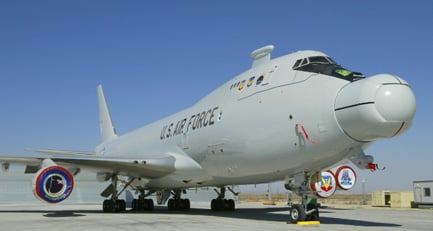
The Airborne Laser, the US Missile Defence programme’s raygun-equipped jumbo jet, is to visit Washington tonight in an attempt to drum up support on Capitol Hill.

Airborne Laser aircraft

The Airborne Laser aircraft, intended to explode ICBMs shortly after liftoff.

The Missile Defence Agency says (pdf) the flying energy-weapon platform will fly into Andrews airforce base outside DC from its normal home at Edwards AFB in California. The 747 is expected to make a night landing, before being shown off to politicos, officials, and the media. It will return to the west coast on 21 June.

The Airborne Laser is a modified Boeing 747-400 freighter aircraft intended to use a Chemical Oxygen Iodine Laser (COIL) to destroy a hostile ballistic missile during the highly-vulnerable “boost phase” of its trajectory — the first few minutes after it is launched.

Missiles in boost are full of pressurized explosive fuel, so even a relatively feeble zapping could cause them to explode. Also, attacking a multiple-warhead ICBM at this point will take out all its re-entry vehicles in one shot.

Actually, the missiles are not full of “pressurized explosive fuel”. The last US missile to do this was the Atlas, retired in the 1960s, which used LOX.

Modern missiles use storable liquid propellants, and the most modern, solid fuel, which do not present the same structural vulnerablitiex.

My Former Employer/Client Under Criminal Investigation

I worked on the Future Combat System Recovery and Maintenance Vehicle, FRMV, from 2003-2006. I worked at BAE Systems in York, PA (Formerly United Defense), under the direction of BAE Systems employees, but my paycheck was from another firm TAC Worldwide, who does technical placement, both temp and perm.

BTW, the folks at TAC are pretty decent, and if you are looking for technical work on the East coast, contact Harry Torbit at their Baltimore Office. He’s a good guy.

We know the money was dirty, because it went through Riggs Bank.

Also the “Bob Cratchett” imagery is prize.

The House of Saud may very well be the most corrupt organization on earth.

BAE faces criminal inquiry in US over £1bn payments

Justice department alarmed at claims over MoD’s role

David Leigh and Rob Evans
Thursday June 14, 2007
The Guardian

The US department of justice is preparing to open a corruption investigation into the arms company BAE, the Guardian has learned. It would cover the alleged £1bn arms deal payments to Prince Bandar of Saudi Arabia.

Washington sources familiar with the thinking of senior officials at the justice department said yesterday it was ‘99% certain’ that a criminal inquiry would be opened under the Foreign Corrupt Practices Act (FCPA). Such an investigation would have potentially seismic consequences for BAE, which is trying to take over US arms companies and make the Pentagon its biggest customer.

The sources say US officials were particularly concerned by the allegations in the Guardian that UK Ministry of Defence officials actively colluded in the payments. One said: “The image of all these Bob Cratchits in Whitehall sitting at their high stools processing invoices from Bandar has been a startling one to us.

The Guardian has revealed allegations that BAE used the US banking system to transfer quarterly payments to accounts controlled by Prince Bandar at Riggs Bank in Washington. Another senior US source said this brought the payments within the ambit of the FCPA. “Prosecutors have previously taken the view that the FCPA does reach that far,” the source said.

Speed bump: USAF sets modest goals for new bomber-12/06/2007-Washington DC-Flight International

Really and truly, if we look at how bombers used, it makes sense to keep the BUFF (B-52) in service for another 50 years.

Speed bump: USAF sets modest goals for new bomber

By Graham Warwick

The USAF wants a new bomber by 2018, but says available technology will limit it to subsonic and manned. Is it aiming too low?

After studying options ranging from unmanned aircraft to hypersonic weapons, the US Air Force has decided its next-generation bomber will be subsonic and manned. Given the budget and time­scale pressures it is not a surprising decision, but the USAF still faces financial and technical challenges if it is to field a new long-range strike aircraft by 2018.

By setting relatively modest requirements, the USAF appears to want to minimise the risk and cost to maximise the chances its next bomber will be delivered on time, within budget and in sufficient numbers. The service wants to avoid repeating its experience with the Northrop Grumman B-2 stealth bomber, cut from 135 aircraft to 21 as requirements changed.

….

US Air Force seeks replacement for high-explosive cannon rounds-12/06/2007-Washington DC-Flightglobal.com

Anyone out there know how frequent in-bore explosions for the PGU-28 A/B there are?

This round replaces the venerable M56 round, and is supposed to offer better ballistics, and a fuse that will detonate at lower velocities (hence higher ranges) than its predecessor.

It sounds like the fuse is just a bit too sensitive.

The PGU-27 (bottom) and M56.

US Air Force seeks replacement for high-explosive cannon rounds

By Stephen Trimble

High-explosive incendiary (HEI) rounds fired by most US Air Force fighters may soon be replaced in the inventory by inert 20mm bullets.

The General Dynamics PGU-28 A/B 20mm semi-armour piercing HEI round entered service during the last decade with the M61 cannon installed on the Boeing F-15, Lockheed Martin F-16 and Lockheed F-22. As of 2001, the USAF and US Navy had stockpiled 8 million PGU-28 rounds, each of which features a pyrotechnic fuze and a pyrophoric explosive.

But the USAF is now seeking a replacement round, launching a market survey on 1 June to identify potential sources for a “non-fuzed, non-explosive round with PGU-28/B [aerodynamic] performance”, an acquisition notice says. The market survey is being conducted by the Joint Munitions and Lethality acquisition centre at Picatinny Arsenal, New Jersey.

The current stockpile of PGU-28/B rounds “limits mission effectiveness,” the notice adds. Concerns about the safety of the HEI round have surfaced involving in-bore explosions. An upgraded version of the PGU-28/B has satisfied the navy’s Boeing F/A-18 community, but not the air force.

Unlike the F-18, the air force’s fighters have cannons mounted directly beside the cockpit, making in-bore explosions an injury risk for the pilot.

Anticipating the requirement long in advance, Alliant Techsystems (ATK) has licensed manufacturing rights in the USA for a round designed by Germany’s Rheinmetall.

The Penetrator with Enhanced Lateral Effect (PELE) round would provide a tungsten casing that would be shattered on impact by a plastic slug. The effect is a blast of shrapnel spreading outward, or laterally, from the impact area.

The 20mm PELE round for the M61 cannon was designed with the air-to-air role of the fighter as the main focus. However, its utility in strafing runs against ground targets – an increasingly important mission for the USAF – has never been tested, says Rodney Ward, a business development director for ATK Ammunition Systems.

In 2004, ATK received a USAF contract to test the air-to-air effectiveness of the PELE round, Ward says. An operational test and evaluation phase is ongoing and should be completed in the fourth quarter of this year.

The market survey is an indication that the air force will seek alternatives to the PELE round to replace the PGU-28/B. Ward says the programme reflects a major change in combat capability for the air force, rather than just a straightforward replacement for a round already in the inventory.

“This is a whole new capability,” he says. “They [will] have a round that is effectively inert that has a lot of blast effect.”

Here is the scoop on on PELE.

Penetrator with Enhanced Lateral Effect (PELE)

PELE technology makes it possible to produce fully inert projectiles. The new technology modifies the projectile performance characteristics,significantly enhancing the accuracy of tank and artillery fire, while substantially reducing the risk of collateral damage. Non-explosive PELE ammunition consists of a high-density casing containing a core made of low-density, low-compressibility material. Upon impact with the target, the low-density material inside the shell is compressed to such an extent that the casing bursts, generating numerous fragments that are propelled in the direction of fire. This way, the round’s lethal impact is restricted to a defined space or limited area, reducing the likelihood of collateral damage. PELE and ALP make it possible to manufacture warheads containing little or no explosive. Moreover, existing ammunition can be inexpensively retrofitted with PELE and ALP technology. Both technologies can be integrated in full- and sub-caliber rounds, and fired from current and future weapon systems.

USAF considers scrapping Lockheed Martin JASSM deal-07/06/2007-Washington DC-Flight International

This is a very large program, and it would be a VERY big deal if it got canceled, but it should be canceled.

USAF considers scrapping Lockheed Martin JASSM deal-07/06/2007-Washington DC

By Stephen Trimble

The US Air Force may cancel the Lockheed Martin AGM-158 Joint Air-to-Surface Standoff Missile programme unless the government and the contractor can agree on a plan to resolve systemic reliability issues by 27 June. The air force has invited Lockheed to propose a way forward for the programme during a 30-day assessment period, but officials are not optimistic about the potential for a successful deal.

The USAF is prepared to replace JASSM with a new-start programme or order an alternative, such as an air-launched version of the Raytheon BGM-109 Tactical Tomahawk or MBDA’s Storm Shadow.

JASSM is a stealthy, penetrating cruise missile with a 453kg (1,000lb)-class warhead. Although the capability remains a requirement for warfighters, the USAF is willing to scrap the programme for a more reliable product. “We do not know if we will be able to certify this programme,” says Sue Peyton, assistant secretary of the air force for acquisition.

The $5.8 billion programme needs to be certificated in order to proceed, after breaching the so-called Nunn-McCurdy limit, a congressional rule for any programme that exceeds its original budget by at least 25%. So far, the air force has spent $2 billion on developing and producing the weapon.

….

The certification requirement allows the USAF to pressure Lockheed to resolve a perceived reliability crisis with JASSM. In 64 flight tests to date, the JASSM has recorded 39 successes and 25 failures, with the latter caused by a wide range of usually small manufacturing quality errors or design glitches.

The air force wants Lockheed to submit an acceptable plan that would elevate the missile’s 58% reliability rate to a minimum of 75%, Peyton says. The service is willing to pick up some of the costs for the reliability improvements, but Lockheed’s proposal must show “the air force they really, really want this programme” by also contributing to the extra cost, she adds.

Those numbers are hideous. Even their 75% target is a big wet kiss to Lockheed.

Cancellation for cause would be a good thing.