Category: International Commerce

Finally, a Good Analogy for What Is Happening to Greece

What the Troika is actually trying to do is not to do the right thing, they are, as Nobel Prize winning economist Amartya Sen notes, trying to go Versailles on Greece:

On 5 June 1919, John Maynard Keynes wrote to the prime minister of Britain, David Lloyd George, “I ought to let you know that on Saturday I am slipping away from this scene of nightmare. I can do no more good here.” Thus ended Keynes’s role as the official representative of the British Treasury at the Paris Peace Conference. It liberated Keynes from complicity in the Treaty of Versailles (to be signed later that month), which he detested.

Why did Keynes dislike a treaty that ended the state of war between Germany and the Allied Powers (surely a good thing)?

Keynes was not, of course, complaining about the end of the world war, nor about the need for a treaty to end it, but about the terms of the treaty – and in particular the suffering and the economic turmoil forced on the defeated enemy, the Germans, through imposed austerity. Austerity is a subject of much contemporary interest in Europe – I would like to add the word ­“unfortunately” somewhere in the sentence. Actually, the book that Keynes wrote attacking the treaty, The Economic Consequences of the Peace, was very substantially about the economic consequences of “imposed austerity”. Germany had lost the battle already, and the treaty was about what the defeated enemy would be required to do, including what it should have to pay to the victors. The terms of this Carthaginian peace, as Keynes saw it (recollecting the Roman treatment of the ­defeated Carthage following the Punic wars), included the imposition of an unrealistically huge burden of reparation on Germany – a task that Germany could not carry out without ruining its economy. As the terms also had the effect of fostering animosity between the victors and the vanquished and, in addition, would economically do no good to the rest of Europe, Keynes had nothing but contempt for the decision of the victorious four (Britain, France, Italy and the United States) to demand something from Germany that was hurtful for the vanquished and unhelpful for all.

The high-minded moral rhetoric in favour of the harsh imposition of austerity on Germany that Keynes complained about came particularly from Lord Cunliffe and Lord Sumner, representing Britain on the Reparation Commission, whom Keynes liked to call “the Heavenly Twins”. In his ­parting letter to Lloyd George, Keynes added, “I leave the Twins to gloat over the devastation of Europe.” Grand rhetoric on the necessity of imposing austerity, to remove economic and moral impropriety in Greece and elsewhere, may come more frequently these days from Berlin itself, with the changed role of Germany in today’s world. But the unfavourable consequences that Keynes feared would follow from severe – and in his judgement unreasoned – imposition of austerity remain relevant today (with an altered geography of the morally upright discipliner and the errant to be disciplined).

Aside from Keynes’s fear of economic ruin of a country, in this case Germany, through the merciless scheduling of demanded payments, he also analysed the bad consequences on other countries in Europe of the economic collapse of one of their partners. The thesis of economic interdependence, which Keynes would pursue more fully later (including in his most famous book, The General Theory of Employment, Interest and Money, to be published in 1936), makes an early appearance in this book, in the context of his critique of the Versailles Treaty.

The purpose of the Versailles Treaty was to break Germany and German spirit, and 20 years later, Europe was at war again.

Now European powers, primarily Germany, are attempting to break Greece and Greek spirit.

This will not end well.

Obama Loses Trade Vote in House ……… and There Was Much Rejoicing

It’s confusing, but basically the House of Representatives overwhelmingly rejected a key portion of the Fast Track process, and I am doing a happy dance.

Hours after President Obama made a dramatic, personal appeal for support, House Democrats on Friday thwarted his push to expand trade negotiating power — and quite likely his chance to secure a legacy-defining accord spanning the Pacific Ocean.

In a remarkable blow to a president they have backed so resolutely, House Democrats voted to end assistance to workers displaced by global trade, a program their party created and has supported for four decades. That move effectively scuttled legislation granting the president trade promotion authority — the power to negotiate trade deals that cannot be amended or filibustered by Congress.

“We want a better deal for America’s workers,” said Representative Nancy Pelosi of California, the House minority leader, who has guided the president’s agenda for two terms and was personally lobbied by Mr. Obama until the last minute.

The vote that prevented the president from obtaining trade promotional authority now imperils the more sweeping Trans-Pacific Partnership, a proposed trade agreement with 11 other nations along the Pacific Ocean that affects 40 percent of the global economy on goods ranging from running shoes to computers.

………

The Democratic revolt left Republican leaders trying to summon support from their own party for trade adjustment assistance, a program they have long derided as a waste of money and a concession to organized labor. Eighty-six Republicans voted for the program, more than double the 40 Democrats who supported it. But the trade adjustment assistance bill failed when 126 voted for it and 303 against.

Republican leaders then passed, in a 219-to-211 vote, a stand-alone bill that would grant the president the trade negotiating authority he sought. But that measure cannot go to the president for his signature because the Senate version of the legislative package combined both trade adjustment and trade promotion.

There is still a possibility that the House will pass the worker assistance bill early next week and send to Mr. Obama, but it would require dozens of Republicans or Democrats changing their votes, a prospect Republicans said was remote.

It’s kind of tough to understand what is going on here, but here is how this was supposed work:

  • In order to pass Trade Promotion Authority (aka TPA or Fast Track), Congress needs to pass displaced worker aid, which provides funds for transition and retraining, for people displaced as a result offshoring
  • Because the Republicans are insisting on offsets for this costs, this measure includes a minuscule cut to Medicare.
  • Fast Track is supposed to be passed.
  • Because Democrats are unwilling to cut Medicare, Democrats were promised a vote to reinstate the Medicare funding.  (but no guarantee that it would pass)

Here’s the kicker:  There were never more than 80 or so Republicans who were willing to support aid to displaced workers, which meant that something like ¾ of the Democratic Caucus need to vote for it, and it meant voting for a Medicare cut, which would have been used by Republicans in the 2016 campaign, just like they did in 2010 over Obamacare.

Additionally, as was observed by Gaius Publius, (the blogger, not the Roman Historian), “Supporting NAFTA Was the Kiss of Death for Democrats — Why Dems Should Think Twice About Voting for TPP.”

Much like Obamacare, Obama is shivving his own party in the hopes of his “legacy”, but this time, they get it, and unlike Obamacare, the TPP, TTIP, and TiSA actually make things worse ……… A lot worse.

They are designed to facilitate the privatization of government functions, encourage IP based rent seeking, and to promote the parasitic financialization of the involved countries.

I am tremendously happy that Obama has lost this, but I expect him to come back again to try and get fast track authority again.

Keep dialing your Congress critters.

The TPP Just got a lot worse

It turns out that the Investor-State Dispute Settlement (ISDS) kangaroo courts are not the worst part of the TPP.

It turns out that it is set up as what the US Trade Representative calls a, “Living agreement: to enable the updating of the agreement as appropriate to address trade issues that emerge in the future as well as new issues that arise with the expansion of the agreement to include new countries.”

What this means is that the agreement can be changed by the vote of a a foreign bureaucracy with no requirement for Congressional advice and consent.

When one looks at the, where the “Judges” work for the benefit large multinational firms, do their adjudication, and then go back to work for the benefit large multinational firms, one can only imagine the skulduggery that can be done with this.

Well, Now We Know What You Have to Do to Make an American Interested in Soccer


I love New Yorker cartoons


Note that John Oliver did this a year ago

It appears that the juxtaposition bribery, money laundering, and tax evasion is is enough to pique the interest in soccer of some people in America:

With billions of dollars at stake, Morocco, Egypt and South Africa jockeyed in 2004 for the privilege of hosting soccer’s most prestigious tournament, the World Cup. The outcome hinged on a decision by the executive committee of FIFA, soccer’s governing body, and a single vote could tip the decision.

And at least one vote, prosecutors said Wednesday, was for sale.

Jack Warner, a committee member from Trinidad and Tobago, shopped his ballot to the highest bidder, federal prosecutors said. In early 2004, he flew to Morocco, where a member of that country’s bid committee offered him $1 million. But South Africa had a sweeter deal, offering $10 million to a group that Mr. Warner controlled, prosecutors said. He voted for South Africa. South Africa got the 2010 World Cup. And Mr. Warner got his  $10 million payout, much of which prosecutors said he diverted for his personal use.

For decades, that was how business was done in international soccer, American officials said Wednesday as they announced a sweeping indictment against 14 soccer officials and marketing executives who they said had corrupted the sport through two decades of shadowy dealing and $150 million in bribes. Authorities described international soccer in terms normally reserved for Mafia families or drug cartels, and brought charges under racketeering laws usually applied to such criminal organizations.

Hours after Swiss authorities arrived unannounced at a Zurich hotel and arrested top FIFA officials early Wednesday morning, the Justice Department and prosecutors for the Eastern District of New York forcefully declared that their investigation had only just begun and pledged to rid the international soccer organization of systemic corruption.

“These individuals and organizations engaged in bribery to decide who would televise games, where the games would be held, and who would run the organization overseeing organized soccer worldwide,” said Attorney General Loretta E. Lynch, who supervised the investigation from its earliest stages, when she was the United States attorney for the Eastern District of New York. “They did this over and over, year after year, tournament after tournament.”

It’s been common knowledge that FIFA is so deeply corrupt that it makes the International Olympic Committee look like Bernie Sanders, so I am not at all surprised that allegations of corruption have finally been made public, though I am a bit surprised that it was the US that led the investigation.

As it stands now, the FIFA president, Sepp Blatter is not among those arrested, but given that these indictments include the FIFA statutes, which cast a very broad net (the phrase “corrupt pattern” comes to mind), if only a few of these people roll, I imagine that he could be a defendant as well.

It appears that these arrests are the proverbial good news for the Jews, as it looks like this will side-track for a while efforts to expel Israel from FIFA:

Israelis were expecting some big news to come out of the annual FIFA Congress this week. But they probably weren’t expecting this.

In a bombshell operation, a Swiss law enforcement team showed up at the Zurich hotel hosting the annual gathering of the international soccer organization — and arrested nine senior officials.

The arrests come after decades of corruption allegations aimed at FIFA. (If you’re unfamiliar, comedian John Oliver’s got you covered.) The arrested officials face charges of taking money in exchange for World Cup hosting bids, as well taking bribes in exchange for media and marketing rights for major international tournaments.

The allegations are damning, but frankly, they couldn’t have come at a better time for Israel. Until Wednesday, much of the coverage of the FIFA Congress surrounded whether delegates would vote to suspend Israel from world soccer.

The Palestinian Football Association is introducing the motion to suspend Israel, accusing it of unjustly restricting Palestinian soccer players’ freedom of movement and claiming that Israel’s West Bank settlement teams violate FIFA rules. Israeli officials have called the effort blatantly political and said that the Palestinians’ complaints all concern Israel’s security forces — not Israel’s soccer teams.

Needless to say, some people are already blaming  the “international Zionist conspiracy” for the arrests.

Personally, I’m hoping that we eventually see similar arrests directed at the NFL, and its head Roger Goodell.

Smart Political Move

During the (quite disastrous for Labour) UK elections, Ed Millibrand was insistent on two big issues: He would not go into a coalition with the Scottish National Party (SNP), and he would oppose a referendum on Britain’s EU membership.

Both positions were big political losers, with Labour being basically turfed out in Scotland, and losing votes from a significant Euroskeptic constituency.

Ed is gone, and the acting Labour leader, Harriet Harman, has announced that the party will support the referendum, but campaign for a “No” vote:

Acting leader Harriet Harman has said Labour will now support plans for an EU referendum by the end of 2017.

Ms Harman told the Sunday Times the change in position came after they “reflected on the conversations we had on doorsteps” during the election.

The PM has pledged to renegotiate a “better deal” for the UK and hold an “in/out” referendum by the end of 2017.

Ms Harman told the BBC’s Andrew Marr Show the party would still campaign for the UK to stay in the EU.

She said: “Whether we are in the European Union or not is a huge, important, constitutional, political, economic decision.”

The Conservatives were bringing forward a bill to allow the referendum to happen, said Ms Harman, and Labour “wouldn’t succeed” in stopping it.

While she coaches this decision in terms of a lack of agency, this is actually a very politically savvy move.

The mainstream Tories (Conservatives) want to stay in the EU, because big business, particularly The City (London’s equivalent of Wall Street), because it makes doing business (and hiding income from Inland Revenue HM Revenue and Customs) much easier, and, particularly for the British FIRE sector.

As such I am sure that the reelected Prime Minister, David Cameron, is really not particularly eager to put Britain’s continued membership in the European Union up to a vote.

However, political realities forced Cameron to promise a referendum, because the loony right of his party was pressuring him, and because the even more right wing UKIP has been taking an increasing portion of what would have been Tory votes, which in the UK’s first past the post system, could prove problematic.

With Labour saying that they will not oppose a referendum, it removes one of the few excuses for Cameron to delay a vote on status, and regardless of what happens, this will not be good for him politically, because, even while he has promised a referendum, which necessarily will upset UK big business, he must also campaign against it, which would serve to strengthen UKIP.

I am not sure if Ms. Harmon intended for there to put the Conservative mainstream in this position, but they appear to be thoroughly skewered on the tines of Morton’s fork.

And Yes, the TTIP, in All Its Bee Killing Glory, Sucks Too

The US, acting on behalf of Monsanto and its ilk, pressured the EU into revoking its common sense pesticide regulations using the TTIP to coerce regulatory forbearance:

EU moves to regulate hormone-damaging chemicals linked to cancer and male infertility were shelved following pressure from US trade officials over the Transatlantic Trade and Investment Partnership (TTIP) free trade deal, newly released documents show.

Draft EU criteria could have banned 31 pesticides containing endocrine disrupting chemicals (EDCs). But these were dumped amid fears of a trade backlash stoked by an aggressive US lobby push, access to information documents obtained by Pesticides Action Network (PAN) Europe show.

On 26 June 2013, a high-level delegation from the American Chambers of Commerce (AmCham) visited EU trade officials to insist that the bloc drop its planned criteria for identifying EDCs in favour of a new impact study.

Minutes of the meeting show commission officials pleading that “although they want the TTIP to be successful, they would not like to be seen as lowering the EU standards”.

The TTIP is a trade deal being agreed by the EU and US to remove barriers to commerce and promote free trade.

Responding to the EU officials, AmCham representatives “complained about the uselessness of creating categories and thus, lists” of prohibited substances, the minutes show.

The US trade representatives insisted that a risk-based approach be taken to regulation, and “emphasised the need for an impact assessment” instead.

On 2 July 2013, officials from the US Mission to Europe visited the EU to reinforce the message. Later that day, the secretary-general of the commission, Catherine Day, sent a letter to the environment department’s director Karl Falkenberg, telling him to stand down the draft criteria.

“We suggest that as other DGs [directorate-generals] have done, you consider making a joint single impact assessment to cover all the proposals,” Day wrote. “We do not think it is necessary to prepare a commission recommendation on the criteria to identify endocrine disrupting substances.”

The result was that legislation planned for 2014 was kicked back until at least 2016, despite estimated health costs of €150bn per year in Europe from endocrine-related illnesses such as IQ loss, obesity and cryptorchidism – a condition affecting the genitals of baby boys.

A month before the meeting, AmCham had warned the EU of “wide-reaching implications” if the draft criteria were approved. The trade body wanted an EU impact study to set looser thresholds for acceptable exposure to endocrines, based on a substance’s potency.

“We are worried to see that this decision, which is the source of many scientific debates, might be taken on political grounds, without first assessing what its impacts will be on the European market,” the chair of AmCham’s environment committee wrote in a letter to the commission.

These could be “dramatic” the letter said.

In a high-level internal note sent to the health commissioner, Tonio Borg, shortly afterwards, his departmental director-general warned that the EU’s endocrines policy “will have substantial impacts for the economy, agriculture and trade”.

The heavily redacted letter, sent a week before the EU’s plans were scrapped continued: “The US, Canada, and Brazil [have] already voiced concerns on the criteria which might lead to important repercussions on trade.”

The series of events was described as “incredible” by the the Green MEP Bas Eickhout. “These documents offer convincing evidence that TTIP not only presents a danger for the future lowering of European standards, but that this is happening as we speak,” he told the Guardian.

Even without a signed deal, it appears that the two big “Free Trade” deals being negotiated have already been used to subvert consumer and environmental safeguards.

Of course, this is precisely what Obama said wouldn’t happen, but I guess that he’s looking forward, not back.

Bob Menendez Shafts Barack Obama on TPP

He managed to get an amendment in the Senate’s TPP bill, which has the effect of toughening human trafficking requirements of member countries, which means that Malaysia’s horrific human trafficking record would make the treaty ineligible for fast track:

Remember, passing Fast Track in the Senate was supposed to be the easy part. Not only did Fast Track get rejected on its first try — “Welcome aboard the S.S. Lame Duck, Mr. President!” — now we get this. Ryan Grim explains:

The Senate approved a bill to “fast-track” trade agreements negotiated by the president. The agreement will prevent Congress from amending or filibustering Obama’s controversial Trans-Pacific Partnership agreement. The TPP deal would have a hard time surviving without fast-track authority.
But a key crackdown on human trafficking survived the legislative jujitsu. The White House considers the provision a deal-breaker, as it would force one of the nations involved in the TPP talks — Malaysia — out of the agreement.

From the US State Department:

Malaysia (Tier 3 [the worst]) is a destination and, to a lesser extent, a source and transit country for men, women, and children subjected to forced labor and women and children subjected to sex trafficking. The overwhelming majority of trafficking victims are among the estimated two million documented and two million or more undocumented foreign workers in Malaysia.
Foreign workers typically migrate willingly to Malaysia from other countries in Asia—primarily Indonesia, Bangladesh, the Philippines, Nepal, Burma, Cambodia, Vietnam, India, Thailand, and Laos—in search of greater economic opportunities.

Here I pause to note that somebody decided that it would be a good idea for the US to take in the Rohingya, the Muslim boat people who have turned to traffickers to escape a slow motion Burmese genocide, after which the Malaysians offered temporary, one-year status to such Rohingya as actually reach their shores.

………

Complicating any efforts to “fix” the bill, however, is the possibility of an alliance between feminist factions in the Democratic party, and Christianist factions among the Republicans, both of whom take strongly principled positions on human trafficking.

Complicating the picture even more, when you think about it, is the potential for agita in 2016. Suppose Obama, very ironically, gets the anti-slavery provisions “fixed,” i.e. removed, and the bill passes in time. The campaign ads practically write themselves. “A vote for TPP is a vote for human trafficking.” “Why does Senator X support slavery?” Cue the ominous music. Cue pictures of skeletal women and children. Cue the die-ins on the trail. I’m sure campaign shops on both sides are practically drooling with joy, because the only way TPP will pass is with bipartisan support. Getting that amendment in there was GENIUS, and we’ll get to how that happened in a moment.

So what we are seeing here is a pissing contest between Menendez and Obama.

The time line is:

  • Menendez does his level best to submarine any potential nuclear deal with Iran, including politically attaching himself to Benyamin Netanyahu.
  • Menendez is indicted for corruption. (BTW, good luck getting a conviction under recent Supreme Court rulings)
  • Menendez inserts an amendment to Fast Track which basically excludes Malaysia from the treaty.

Note also the consequences of excluding Malaysia, the most populous Muslim majority state in the world the only sizable majority Muslim state in the TPP, so its exclusion would leave the rump state of Brunei (population 415,717) as the only majority Muslim nation in the agreement.

I cannot believe that I am actually on Menendez’ side on all of this, but the TPP is clearly bad news, as the TTIP with Europe, (more on that later) so to the degree that these treaties can be stopped, the better it is for everyone but the multinational business for whom this is a big government subsidy.

This is a Good Rebuttal of Obama’s Pro TPP Arguments

Michael Wessel, who has been deeply involved with trade deals, and who has had access to the classified draft text of the TPP, has basically called Barack Obama over his claims about the trade deal:

You need to tell me what’s wrong with this trade agreement, not one that was passed 25 years ago,” a frustrated President Barack Obama recently complained about criticisms of the Trans Pacific Partnership (TPP). He’s right. The public criticisms of the TPP have been vague. That’s by design—anyone who has read the text of the agreement could be jailed for disclosing its contents. I’ve actually read the TPP text provided to the government’s own advisors, and I’ve given the president an earful about how this trade deal will damage this nation. But I can’t share my criticisms with you.

I can tell you that Elizabeth Warren is right about her criticism of the trade deal. We should be very concerned about what’s hidden in this trade deal—and particularly how the Obama administration is keeping information secret even from those of us who are supposed to provide advice.

So-called “cleared advisors” like me are prohibited from sharing publicly the criticisms we’ve lodged about specific proposals and approaches. The government has created a perfect Catch 22: The law prohibits us from talking about the specifics of what we’ve seen, allowing the president to criticize us for not being specific. Instead of simply admitting that he disagrees with me—and with many other cleared advisors—about the merits of the TPP, the president instead pretends that our specific, pointed criticisms don’t exist.

What I can tell you is that the administration is being unfair to those who are raising proper questions about the harms the TPP would do. To the administration, everyone who questions their approach is branded as a protectionist—or worse—dishonest. They broadly criticize organized labor, despite the fact that unions have been the primary force in America pushing for strong rules to promote opportunity and jobs. And they dismiss individuals like me who believe that, first and foremost, a trade agreement should promote the interests of domestic producers and their employees.

I’ve been deeply involved in trade policy for almost four decades. For 21 years, I worked for former Democratic Leader Richard Gephardt and handled all trade policy issues including “fast track,” the North American Free Trade Agreement and the World Trade Organization’s Uruguay Round, which is the largest trade agreement in history. I am also a consultant to various domestic producers and the United Steelworkers union, for whom I serve as a cleared advisor on two trade advisory committees. To top it off, I was a publicly acknowledged advisor to the Obama campaign in 2008.

………

The text of the TPP, like all trade deals, is a closely guarded secret. That fact makes a genuine public debate impossible and should make robust debate behind closed doors all the more essential. But the ability of TPP critics like me to point out the deal’s many failings is limited by the government’s surprising and unprecedented refusal to make revisions to the language in the TPP fully available to cleared advisors.

Bill Clinton didn’t operate like this. During the debate on NAFTA, as a cleared advisor for the Democratic leadership, I had a copy of the entire text in a safe next to my desk and regularly was briefed on the specifics of the negotiations, including counterproposals made by Mexico and Canada. During the TPP negotiations, the United States Trade Representative (USTR) has never shared proposals being advanced by other TPP partners. Today’s consultations are, in many ways, much more restrictive than those under past administrations.

………

Only portions of the text have been provided, to be read under the watchful eye of a USTR official. Access, up until recently, was provided on secure web sites. But the government-run website does not contain the most-up-to-date information for cleared advisors. To get that information, we have to travel to certain government facilities and sign in to read the materials. Even then, the administration determines what we can and cannot review and, often, they provide carefully edited summaries rather than the actual underlying text, which is critical to really understanding the consequences of the agreement.

………

In an effort to diminish criticism, USTR is now letting cleared advisors review summaries of what the negotiators have done. In response to a question about when the full updated text will be made available, we’ve been told, “We are working on making them available as soon as possible.” That’s not the case overseas: Our trading partners have this text, but the government’s own cleared advisors, serving on statutorily-created advisory committees, are kept in the dark.

………

Senator Warren should be commended for her courage in standing up to the President, and Secretary Clinton for raising a note of caution, and I encourage all elected officials to raise these important questions. Working Americans can’t afford more failed trade agreements and trade policies.

Congress should refuse to pass fast track trade negotiating authority until the partnership between the branches, and the trust of the American people is restored. That will require a lot of fence mending and disclosure of exactly what the TPP will do. That begins by sharing the final text of the TPP with those of us who won’t simply rubber-stamp it.

(emphasis mine)

What might be useful here is an amendment to any fast track legislation that says that the full and final text of any agreement, along with all side agreements, must be made available to the public in full for some period of time (I would suggest 6 months, which is enough time for lawyers who make their money on gaming this sort of crap to develop loose lips) before it can be taken up by the Congress.

Whiny Bitches

Top House Republicans believe the business community is blowing its chance to clinch a trade deal.

Unlike unions, they say, Big Business advocates aren’t flooding Capitol phone lines. They’re not winning over skeptical Republicans. And they haven’t made much headway with business-friendly Democrats who are considering voting for the package, either.

That threatens to create a dangerous reality for supporters of a sweeping trade deal with Pacific Rim nations: that it will become more politically tenable for Republicans to be against trade promotion authority legislation than for it.

The chorus of GOP complaints — striking considering the typically close ties between Republican leadership and Big Business — is coming from all over the Capitol. But it’s loudest on the House side.

David Stewart, a top aide to Speaker John Boehner, voiced the frustration of Boehner’s office during a meeting Friday with officials from business lobby groups, telling them their effort is falling short. During the meeting at the offices of the Business Roundtable, Stewart said unions are outworking the business groups on calls to GOP lawmakers’ offices.

“The lobbying effort on the Hill has been abysmal,” one senior GOP aide said. “Calls and letters into member offices are running 10 to 1 against TPA. This is an uphill fight already given the lack of trust in the president and the general unpopularity of TPA, and the current lobbying effort has not made it any easier. If TPA passes in the House it will be despite the downtown coalition and the president, not because of them.”

Of course, trade politics are tricky — the debate over TPA has triggered concerns ranging from job losses in individual House districts to currency manipulation — and it’s not just the business community that’s struggling. President Barack Obama hasn’t yet been able to build enough Democratic support to get the fast-track bill across the finish line. He faces a big obstacle in House Minority Leader Nancy Pelosi (D-Calif.), who is vehemently opposed to the legislation as it’s currently written.

Gee, do you want some cheese with that whine?

More important, the big business lobbyists have limited effect on the Teabaggers in the base, and the wackdoodle base cannot deal with being on the same side of an issue as a black President.

If anything, the Republican base is even more opposed to TPP and fast track than the Democratic base.

Considering the number of scalps that the Teabaggers have accumulated in primaries, it’s no wonder that big business lobbyists are having difficulty moving the needle.

Lawsuit Filed in Japan Against TPP

This is actually a not a tinfoil hat thing.

The lead plaintiff in this lawsuit against the TPP is a member of the Japanese Diet (Parliament) and former agriculture minister, and the the legal argument addresses a huge flash point in Japanese culture:

More than 1,000 people filed a lawsuit against the government on Friday, seeking to halt Japan’s involvement in 12-country talks on a Pacific Rim free trade agreement, which they called “unconstitutional.”

A total of 1,063 plaintiffs, including lawmakers, claimed in the case brought to the Tokyo District Court that the proposed Trans-Pacific Partnership would undermine their basic human rights under the Constitution.

The lawsuit is led by Masahiko Yamada, 73, a lawyer who served as agriculture minister in 2010 as part of the Democratic Party of Japan government.

“The TPP could violate the Japanese right to get stable food supply, or the right to live, guaranteed by Article 25 of the nation’s Constitution,” Yamada, who abandoned his party in 2012 over then-Prime Minister Yoshihiko Noda’s push to join the TPP talks, said Thursday before the court filing.

The envisaged pact would benefit big corporations but would jeopardize the country’s food safety and medical systems, and destroy the domestic farm sector, according to the plaintiffs.

One of the consistent concerns of Japanese society is food security, a rather unsurprising fact given that the nation is both densely populated and highly populated, placing arable land at a premium.

Particularly when juxtaposed with the Soybean Bounce of the 1970s, when the US abruptly embargoed soybean exports in response to a spike in livestock feed prices, which sent Japan scrambling for alternate sources of their dietary staple, this is is a big deal.

Even if the case gets laughed out of court, it will be a lightning rod for opponents of the deal.

Senate Dems Don Spelunking Helmets

Senate leaders, after personal intercessions by President Obama, reached an agreement Wednesday on a path to grant the president accelerated power to complete a sweeping trade accord ringing the Pacific Ocean — just a day after fellow Democrats had blocked him.

The larger aim is to secure a 12-nation agreement known as the Trans-Pacific Partnership, spanning the Pacific from Canada and Chile to Japan and Australia and encompassing 40 percent of the world’s economic output. Mr. Obama sees the pact as a central part of his economic legacy, the largest trade deal in two decades and the realization of his foreign policy pivot toward Asia.

It also means money. Major American business interests, from Nike to Boeing and Hollywood to Silicon Valley, want the deal badly. Labor and environmental groups see it as a threat to American workers at the expense of profits.

A series of trade-related votes will begin Thursday and stretch well into next week. The trade promotion authority would give the president the ability to move more quickly on the deal, leaving Congress with the power to vote up or down on the agreement but with no ability to amend it.

I had hoped that they would have at least made it a full day,

Obama Claims That Fast Track Will Not Kill Dodd-Frank. Canadian Files NAFTA Complaint to Kill Volker Rule

Obama calls the claim lubricious, but the government of Canada has moved to exempt its own bonds from the Volker Rule:

In her attacks on Obama’s pending trade deals, Elizabeth Warren has argued that could undermine US financial regulations like Dodd Frank. The Administration has taken to trying to dismiss Warren as not knowing what she was talking about. More skillful defenders of the traitorous trade deals took the tact of saying that Warren could in theory be right, but the odds of her fears playing out were so remote as to not be worth worrying about.

In a long, careful article in the Nation yesterday, George Zornick explains even with the limited information that we have now about the contents of proposed treaties like the TPP and its ugly European step-sister, the TTIP, Warren’s worries are valid. ………

………

But an example of Warren’s concerns came out of left field yesterday, as reported by the Wall Street Journal:

A U.S. rule that prohibits banks from taking risky bets with their own money violates the North American Free-Trade Agreement because it bans U.S. banks from trading triple-A-rated Canadian government debt, Canada’s finance minister said Wednesday…
Canadian concerns about the Volcker rule’s treatment of sovereign debt aren’t new. In 2012, Canada joined European countries and Japan in raising concerns about the law’s reach..

Mr. [Joe] Oliver noted that the Volcker rule reflects concerns about the credit standing of some foreign securities. That concern doesn’t apply to Canada, he said, because Canada’s credit rating is better than the U.S. government and U.S. municipalities…

“I believe—with strong legal basis—that this rule violates the terms of the Nafta agreement,” Mr. Oliver told a securities industry audience in New York that included the U.S. ambassador to Canada, Bruce Heyman. “I hope the United States administration sees that changing the Volcker rule is in its own best interests and that of its biggest trading partner.”

Yep, clearly Obama was right to portray Warren as a hysterical woman over the possibility of the Investor State Dispute Settlement (ISDS) process will never be used to roll back financial regulations.

When juxtaposed with how Mitch McConnell crowing about how a future Republican President will use Fast Track to run impose the Republican agenda:

If we had a Republican president right now, not a single Democrat would vote for Trade Promotion Authority. So what I’ve said to my members, if we want the next Republican president, who we hope will be sworn in less than two years from now, to have a chance to do trade agreements with the rest of the world, this bill is about that president as well as this one.

Fast Track, the TPP, and the TTIP are seen by the Republicans as a weapon to weild.

It Looks Like I Wasn’t the Only One Who Thought That Obama’s Attitude toward Elizabeth Warren Was Sexist

It turns out that the distinguished gentleman from Ohio, Senator Sherrod Brown, found Obama’s statements about Warren and the TPP dismissive in a way that he never would be to male members of congress:

Ohio Sen. Sherrod Brown threw a grenade into the ongoing war of words between Sen. Elizabeth Warren and President Barack Obama, a war that reached new heights with Tuesday’s dramatic setback of Obama’s trade agenda in the Senate.

Brown, one of the top Democratic leaders of the uprising against Obama’s trade push, criticized the president for what the senator saw as “disrespectful” comments toward Warren and suggested that Warren’s gender may have played a role.

When asked how Obama was being disrespectful of the Massachusetts Democrat, Brown replied: “I think by just calling her ‘another politician.’” He continued, “I’m not going to get into more details. I think referring to her as first name, when he might not have done that for a male senator, perhaps? I’ve said enough.”

Particularly when juxtaposed with a former staffer saying of the Obama White House that, “It actually fit all of the classic legal requirements for a genuinely hostile workplace to women,” and his “Sweetie” comment to a female reporter, I think that the burden of proof must be on the President, and not Mr. Brown.

And now Obama, though his proxy White House press secretary Josh Earnest, is not just asking for an apology from Senator Brown, but is insisting that it inevitable that he will eventually apologize.

The word, “Whiny Bitch,” is completely inadequate to describe this.

This Sh%$ Just Got Real on Fast Track

Senate Democrats voted against cloture, 52-47, so the vote failed to reach the 60 vote threshold:

President Obama collided with his own party Tuesday when Senate Democrats stalled consideration of a trade measure that would give the administration greater authority to negotiate more freely with other countries.

The Senate vote was a sharp blow to the president’s efforts to win approval for a new Asia-Pacific trade bill that has emerged as a top agenda item for Obama. Only one Democratic senator, Thomas R. Carper of Delaware, voted with the president Tuesday.

Administration officials and Republican leaders immediately said they would bring a measure back to the Senate floor.

But the setback highlighted the president’s failure to convince Democratic lawmakers, labor union leaders and environmental groups that the 12-nation trade deal known as the Trans-Pacific Partnership would help the U.S. economy. Obama has argued that the pact would open markets, promote better labor conditions abroad and protect endangered species and the environment.

I called both of my Senators this morning to ask them to vote now and to vote against cloture.

For the next round, you should do the same.

What didn’t help was Obama’s belittling, and quite frankly chicken sh%$ dismissal of Elizabeth Warren’s concerns:

………

What began with a slight jab at Warren’s trade views — “She’s wrong on this,” Obama told MSNBC three weeks ago — has escalated into a series of daily barbs and retorts carried out on cable TV and Internet interviews, on radio shows and from the official podium at the White House.

Over the weekend, Obama used a rather harsh turn of phrase — “a politician like everybody else” — against Warren, who has carefully constructed an image as a principled voice in the wilderness taking unpopular political stands to help the voiceless working class.

Warren returned fire in interviews and appearances Monday and Tuesday, accusing the president of duplicity because he “won’t actually let people read the agreement” before Tuesday’s procedural vote in the Senate.

………

Allies of Warren were taken aback by the personal nature of the president’s remarks.

“I think the president was disrespectful to her, the way he did that. I think the president has made this more personal than he needed to,” Sen. Sherrod Brown (D-Ohio), who has led opposition to the trade legislation, told reporters after Tuesday’s vote.

Brown said that some of Obama’s comments were perceived as insults directed not only at Warren but also at other Democratic opponents of the trade deal.

I haven’t heard this about Sherrod Brown, or about Bernie Sanders, or other male Senators.

The Obama administration, and Barack Obama, have a long history of being dismissive of women, with one former aide describing his administration as, “This place would be in court for a hostile workplace. … Because it actually fit all of the classic legal requirements for a genuinely hostile workplace to women“. (See also “sweetie“)

In addition to allowing his sexism to show, Obama also was stupid about this, because it is precisely the sort of behavior that gets every Senator’s back up.

I’m happy about this development, though I am concerned that I am on the same side of this as the right wing morons at Pajamas Media, who are, “Rooting for the Democrats to Block Obama’s ‘Fast Track’ Deal.”

Truth be told, part of the nearly unanimous opposition of the Democrats for cloture is not as significant as it seems, as some of the Democrats want to attach related provisions to the vote:

According to Democratic leadership aides, Senators Harry Reid of Nevada, the Democratic leader, and Chuck Schumer of New York, the No. 3 Democrat, have proposed a compromise to Republican leaders: First, hold a separate vote on legislation aimed at discouraging so-called currency manipulation by American trading partners, which could be vetoed by the president. Then, wrap the fast-track authority he is seeking with a more encompassing bill, including assistance for displaced workers, extension of an African trade accord and other trade enforcement measures.

That offer could be the path forward, given that at least eight Democrats who normally embrace trade deals voted no on Tuesday.

So the votes may shift in the next few days.

A note for Delaware voters, there was only one Democratic Senator who voted for cloture, Delaware’s Tom Carper.

Delaware primary voters, and anyone interested in donating to his campaign, please take note.

I’ve Heard this Song Before

In a Japanese redux of the Obama administrations secrecy on the Trans Pacific Partnership, the Abe administration has reneged on a promise of transparency:

A senior government official has backtracked on his proposal to give lawmakers access to the draft text of a 12-nation Pacific trade pact ahead of a potential deal.

Yasutoshi Nishimura, senior vice minister of the Cabinet office in charge of the negotiations, said his intent was misunderstood when he told a press conference on Monday that Japan will “make preparations to allow lawmakers access to the text next week” at the earliest.

Nishimura apparently withdrew the disclosure plan due to strong opposition from some government officials, who are concerned about differences in confidentiality obligations between Japan and the United States, according to informed sources.

In line with a rule agreed with the 11 other countries, only a handful of Japanese officials can currently read the text, such as Prime Minister Shinzo Abe, TPP minister Akira Amari and chief TPP negotiator Koji Tsuruoka.

However, the U.S. Trade Representative’s Office has already made the draft Trans-Pacific Partnership text available to U.S. legislators on condition they do not make any part of it public.

Nishimura said Thursday that Tokyo cannot take the same measure as Washington “there is a big difference between the duty of confidentiality” of lawmakers in the two countries.

If this deal cannot handle the light of day, which appears to be the case, it’s a bad deal.

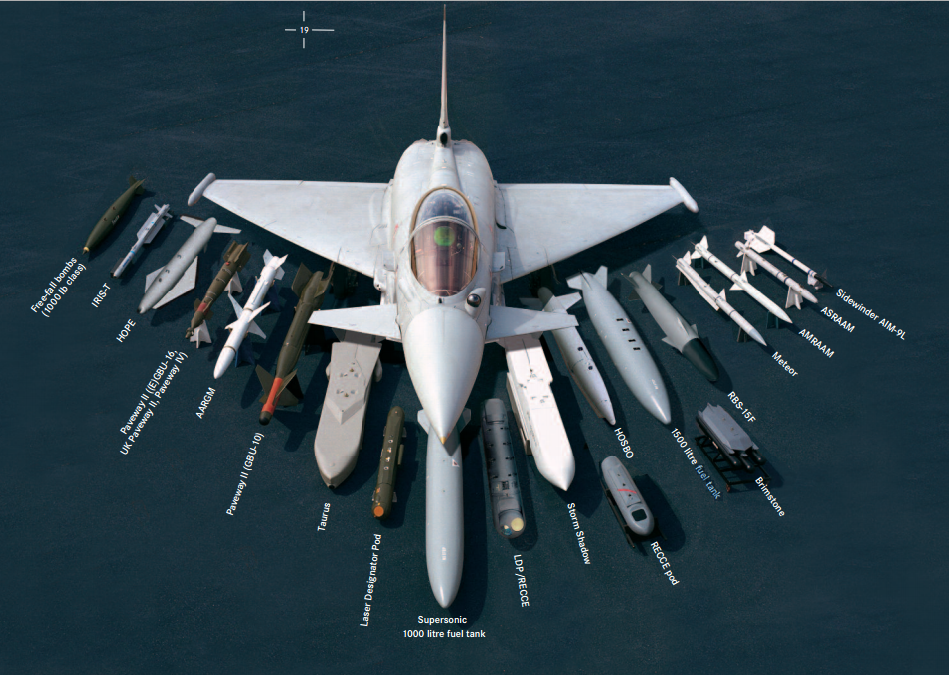
The French Finally Start Making Foreign Sales for the Rafale

For a number of years now, the Rafale has been the bridesmaid, and never the bride, on foreign sales.

The logjam broke when India selected the Dassault aircraft as the winner of its MMRCA competition.

The contract was for 126 aircraft, with the first 18 being delivered by Dassault, and the remainder being locally manufactured by state owned Hindustan Aeronautics Limited (HAL).

At this point contract negotiations because Dassault was unwilling to offer performance guarantees for the aircraft manufactured by HAL:

After months of seeing Dassault Aviation being browbeaten in the Indian press, French arms procurement agency DGA defended its contractor, asserting that a 2012 agreement to provide India with Rafale fighter jets never committed the company to guarantee aircraft manufactured in India at state-owned Hindustan Aeronautics Ltd. (HAL). However, a recent senior adviser to HAL’s management tells Aviation Week that guaranteeing HAL’s work is not the issue, but that the French are being “rigid” and refusing to stand behind the integrity of the design.

“Dassault will not be responsible for the whole contract. It is a co-management setup,” says French defense procurement chief Laurent Collet-Billon, who was clear that France will not assume full liability for HAL-built Rafales. “It cannot be a problem, because it was not in the request for proposals [RFP].”

Speaking to reporters during an annual media address Feb. 9, France’s arms procurement chief said the €10.2 billion ($12 billion) agreement—which has been under negotiation for more than three years—calls for the first 18 of 126 Rafale jets to be built in France. After that, HAL would take over production of the remaining 108 aircraft.

………

Moreover, a retired senior Indian military officer who was involved in the drafting of the original RFP and has been a senior advisor to HAL, tells Aviation Week that “the French don’t want to be accountable in any way. The original equipment manufacturer [OEM] has to stand guarantee with respect to design and integrity of design. The French are trying to get away from the OEM’s responsibility.” He added that the defense ministry would eventually have to choose between the Rafale and the Fifth-Generation Fighter Aircraft (FGFA), a HAL-developed variant of the Sukhoi T-50.

………

Dassault’s response to the RFP was influenced by a planned partnership with Reliance Industries, a $75 billion private-sector energy-based conglomerate that planned to expand into aerospace and defense. Reliance would have performed much of the manufacturing work on the locally built Rafales in new-build facilities. However, the Indian government has insisted that HAL build the aircraft. The original manufacturers of the Su-30MKI and Jaguar were not asked for similar guarantees.

The subtext here is that Dassault has absolutely no confidence in the ability of HAL to make Rafales in a timely or competent manner.

After much negotiation, it was offered that HAL be upgraded to co-contractor status, which would have the effect of increasing technical transfer at the cost of HAL being responsible for any guarantees on the aircraft that they build.

While all of this was going on, an actual sales deal was signed with Egypt, which would have 24 jets pulled out of the current pipeline for the French AF, and modified slightly. (Basically pulling wiring for nuclear weapons and going with a non-NATO communications system)

The fact that Rafael finally had some export orders, along with the fact that India has a desperate need for new airframes, (it’s aging fleet of MiG-21s are crashing with alarming regularity) India and France cut a deal for a government to government transfer of 36 of the fighter jets:

India will now negotiate direct purchase of 36 Rafale jets from France through a government-to-government deal worth around $4 billion, without any “Make in India” or technology transfer component, to meet IAF’s urgent “critical operational necessity” for new fighters.

After Modi held extensive talks with French President Francois Hollande in Paris on Friday, it was announced that fresh commercial negotiations will now be held for the direct acquisition of two Rafale squadrons (each has 18 jets) in “flyaway” condition.

“France has agreed to fast-track the deliveries and give us better terms for the outright purchase and longer maintenance support for the jets. Finding the money for this contract should not be a problem since it will have to be paid in installments linked to deliveries,” said a source.

Basically, the French came away with the upside of an Indian deal, it removed uncertainty in other nations about being a “first mover” on the export front, which led to the Egypt deal, and they did not have to hitch their wagon to the famously f%$#ed up HAL, which, as evidenced by the 30+ year and counting development of the Tejas lightweight fighter, is something that would have bitten Dassult in the butt at a later date.
.

And now there is the announcement of the sale of an additional 24 aircraft to Qatar.

After what must have been over a decade of uncertainty, it appears that Dassault will stay in the fighter business.

Seriously, Nike? I Think That Obama Is Trolling TPP Opponents Now

Obama spoke at a Nike plant to promote the Trans Pacific Partnershio (TPP).

This is an interesting choice, considering that the show manufacturer is patient zero in shipping jobs overseas to contractors who practice abusive worker policiew.

Bernie Sanders is not unaware of the irony of the choise of venue:

Sen. Bernie Sanders (I-Vt.) is calling upon President Obama to cancel his plans to visit Nike’s corporate headquarters this week as part of the White House’s push to drum up support for a major new trade agreement.

Sanders said the shoe giant, which has moved many of its manufacturing jobs to cheaper markets overseas, only epitomizes how previous trade deals “have failed American workers.”

In a letter sent to Obama Wednesday afternoon and obtained by the Los Angeles Times, the self-identified socialist, who is now running for president as a Democrat, says the proposed Trans-Pacific Partnership, or TPP, would only boost Nike’s profits while doing nothing to increase manufacturing jobs here.

“While manufacturing may not be the most glamorous job, I’m sure that there are workers across America, from Baltimore to Los Angeles to Vermont to Ferguson, who would be more than happy to be paid $15-$20 an hour to manufacture the Nike products they buy,” Sanders wrote.

………

Obama plans to visit Nike’s Portland-area headquarters Friday morning as he takes his sales pitch outside Washington for both the 12-nation Pacific trade deal and the so-called “fast track” authority he has said is vital to finalizing negotiations with Japan and other partners.

Obama’s fellow Democrats are proving to be the main obstacle to passing both in Congress, but he has been ramping up his appeals in recent weeks.

………

But Sanders said TPP would “do nothing to encourage Nike to create one manufacturing job in this country,” and would only boost its executives’ compensation.

He cited a study that Nike employs more than 300,000 workers in Vietnam, where the minimum wage is just 56 cents an hour and labor unions are banned.

Nike has been the subject of protests for its use of foreign sweat shop labor for over a decade, and Obama thinks that it is a good idea to extol the virtues of the TPP there.

I am not sure if Barak is just f%$#ing with us, or if he just believes that no one could possibly have a fulfilling life living on shop floor.

In either case though, his decision to speak there oozes contempt for people on the other side of the issue.

Joan F%$#ing Walsh is Calling Obama a Liar?

Joan Walsh, former editor-in-chief for Salon magazine, has been a long time, and vehement supporter of Barack Obama.

Well, she just called the President a liar on the Trans Pacific Partnership:

I’m on record declaring that the “split” in the Democratic Party over economic populism has been over-hyped by the media, the GOP and conservative Democrats. Democrats have way more in common, when it comes to addressing growing income inequality and declining social mobility, than differences.

But the divisions over the Trans Pacific Partnership (TPP) are real, and they’re getting ugly. President Obama has apparently decided reasoning and lobbying isn’t going to be enough to win over skeptics; he’s lately resorted to personal insults. Telling Chris Matthews Tuesday that “I love Elizabeth [Warren]…but she’s wrong on this” was a big wet kiss, compared to what came later.

On Thursday Obama compared critics of the deal to Sarah Palin and other wingnuts who peddled “death panel” lies about the Affordable Care Act, in a speech to supporters at Organizing For America, the offshoot of his campaign juggernaut Obama For America. He escalated his attacks when he jumped on a conference call with reporters on Friday.

“The one that gets on my nerves the most is the notion that this is a ‘secret’ deal,” Obama said. “Every single one of the critics who I hear saying, ‘this is a secret deal,’ or send out emails to their fundraising base saying they’re working to prevent this secret deal, can walk over today and read the text of the agreement. There’s nothing secret about it.” He singled out “unions” among the wrongheaded critics of his TPP plans.

I confess: I haven’t paid close enough attention to the TPP controversy. But when the president started attacking Warren and unions so personally, I got interested. He’s saying they’re either stupid, or lying, or both. It reminded me of the dark days before the 2010 midterm “shellacking,” when Press Secretary Robert Gibbs attacked “the professional left,” and Vice President Joe Biden told progressives to “stop whining.” That didn’t work; the election was a disaster.

The anti-progressive rhetoric is getting uglier – and this time, some of it’s coming from the president. The AFL-CIO’s Thea Lee has worked on global trade issues for 25 years, and “I don’t think I’ve ever seen it quite as bad as this,” she says.

Sure, both sides are using strong rhetoric, but the president’s attack on his critics as “dishonest” would imply that he’s the one telling the truth. In fact, here are three big ways the president is lamentably shading the truth when it comes to TPP.

Secrecy: It’s true that members of Congress can personally “walk over” and “read the text” of the agreement. Alone, without staff, and without taking notes. And they’re prohibited by law from discussing the details with the media or their constituents.  The administration has deemed the negotiations “classified.”

………

So that’s what Warren means by a “secret deal.” She and Sen. Sherrod Brown wrote to the president this weekend asking that he declassify the latest negotiated text and release it, before demanding a “fast track” vote on the agreement.

Marginalizing opposition as Warren and “the unions.” Warren is joined by Democrats ranging from frequent ally Brown to pro-business voices like Sen. Chuck Schumer to moderate Sen. Bob Casey. While the president hoped to win support from the Congressional Black Caucus, skeptics remain. And yes, labor has been a loud voice against the deal – along with the rest of the Democratic base, and then some.

The coalition opposing TPP includes the National Resources Defense Council, Doctors without Borders, the Electronic Frontier Foundation; critics of certain aspects of the likely deal include New York Times food writer Mark Bittman and the AARP. They are concerned about the way TPP could affect not only manufacturing jobs, but drug prices, intellectual property, environmental regulation and food safety. Obama is facing a remarkably broad-based pushback to his plans, and his effort to isolate Warren and unions is disingenuous.

Denying the vast, pro-corporate power of the “Investor State Dispute Settlement” panel. The wrangling between Warren and the White House over TPP isn’t new. Ever since her March 4 op-ed denouncing the “Investor State Dispute Settlement” provisions of the trade deal, frankly, administration officials have been trying to make Warren look a little batty.

………

“I think if you could get my colleagues to be honest, on the Democratic side,” Sen. Sherrod Brown told the Huffington Post, “they will say they’ve been talked to, approached, lobbied and maybe cajoled by more cabinet members on this issue than any issue since Barack Obama’s been president…I wish they put the same effort into minimum wage. I wish they put the same effort into Medicare at 55. I wish they put the same effort into some consumer strengthening on Dodd-Frank.”

So far, though, the pressure hasn’t worked – and now the administration is distorting the truth. The president can do better than this – and he’s likely going to have to. Hillary Clinton shouldn’t take bad advice from the media about arbitrarily “distancing” herself from the Obama administration. But this is a real conflict for the 2016 frontrunner. And on this one, she might have to choose between the president and much of the party base.

The statements are remarkable primarily because of its source.

Joan Walsh is someone I would describe as an Obamabot, and if he’s lost her on this issue, this is an indication of a significant shift in attitude among Obama supporters.

TPP Dayenu

For the gentiles out there, Dayenu is a song that sung at the Passover Seder. (My family’s Minhag [tradition] is that it is sung in the key of “off”).

It describes the exodus from Egypt, and ends each stanza with “Dayenu”, which means, “It would be enough”.

In any case, I will reproduce part of the TPP trade deal Dayenu:

1. The TPP makes it easier to offshore more jobs now performed in the United States.

2. If the TPP just made it easier to offshore more jobs and did not also generate increasing downward pressure on wages, it would still be sufficient to vote to kill it!

3. If the TPP just generated increasing downward pressure on wages and did not also empower another 25,000 foreign corporations to use Investor State Dispute Settlement (ISDS) tribunals to gut our net neutrality, environmental, health, labor and safety laws and regulations, it would still be sufficient to vote to kill it!

4. If the TPP just empowered another 25,000 foreign corporations to use investor state tribunals to gut our net neutrality, environmental, health, labor and safety laws and regulations and did not also give big pharma new monopoly patent rights, it would still be sufficient to vote to kill it!

5. If the TPP just gave big pharma new monopoly patent rights, and did not also provide for rolling back financial regulations put in place after the crash of 2008, it would still be sufficient to vote to kill it!

6. If the TPP just rolled back financial regulations and did not also provide for banning buy local and buy domestic policies, it would still be sufficient to vote to kill it!

7. If the TPP just provided for banning buy local and buy domestic policies and did not also undermine climate change and energy policies by constraining the permissible policies governments can use to implement them, it would still be sufficient to vote to kill it!

8. If the TPP just undermined climate change and energy policies by constraining the permissible policies governments can use to implement them and did not also use an anti-democratic fast track process that gives Representatives and Senators no space to represent the range of people they represent, it would still be sufficient to vote to kill it!

9. If the TPP did not just use an anti-democratic fast track process that gives Representatives and Senators no space to represent the range of people they represent, and did not also potentially prevent the Treasury from replacing the practice of issuing Treasury debt to fund deficit spending with alternative funding methods, it would still be sufficient to vote to kill it!

Read the rest.