Category: Media

Well, At Least the Editorial Page Can’t Get Any Worse

Here are some links about the possible takeover of Dow Jones (including the Wall Street Journal) by Rupert Murdoch’s news corp.

The bottom line is this: It would be impossible for the Wall Street Journal editorial page to get any worse. It has been dutifully publishing lies, frequently lies that are directly contradicted by the front page stories.

The issue is whether or not it will make the news in the WSJ worse, and the answer is that over the long term, it almost certainly will.

The real question is whether this is a bad thing. Any number of people buy the Journal in spite of its editorial page, and to the degree that the WSJ becomes less “essential” it means that fewer people will be exposed to this, and and it will become less of a spring board for pundits to do the shows.

All in all, the loss of a source of legitimacy to the insane right wingers might be a net plus.

People that I Hate To Agree With

There are times when I find myself agreeing with people or organizations that I find abhorent.
This is one of those times.
First, Andrew Sullivan, Proud Endorser of the Racist and Sloppy Bell Curve:

The bottom line for Americans is this: George Bush’s friends do not go to jail. Your friends do.

This is a very simple matter. Either Libby is subject to the rule of law or not. Bush’s action is constitutionally solid but morally and politically indefensible – an act of arrogance born of permanent privilege that still, somehow, even after all these years, manages to shock.

And if that didn’t make me feel queasy, there is The Moonie Washington Times, whose sole purpose seems to be giving the New York Sun a run for its money regarding the hackticular nature of it’s news and editorial sections:

But none of this exonerates the commutation. Perjury is a serious crime. This newspaper argued on behalf of its seriousness in the 1990s, during the Clinton perjury controversy, and today is no different. We’d have hoped that more conservatives would agree. The integrity of the judicial process depends on fact-finding and truth-telling. A jury found Libby guilty of not only perjury but also obstruction justice and lying to a grand jury. It handed down a very supportable verdict.

SoundExchange Realizes that Congress Is Going Cut Them a New One

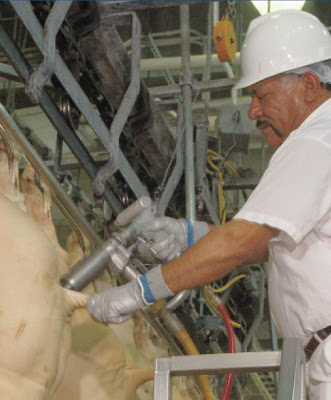
I used to work at Jarvis Products corporation, and I worked on meat packing tools including the Bung Dropper.

It looks like this: , And it does this:

Here is the Youtube:

Yep, it literally cuts the animal a new asshole.

Sound Exchange decided to rape online radio stations, and now those stations have the US Congress’s ear. This means that it’s likely that they will get the deal that over the air radio has, which will lose them money relative to the status quo, so congress is poised to cut them a new asshole.

SoundExchange offers royalty compromise
By Austin Modine in Mountain View
Published Monday 2nd July 2007 23:15 GMT

Music industry taxman SoundExchange is offering a new deal to internet radio broadcasters who say upcoming royalty hikes will kill online broadcasting.

The proposed compromise puts a ceiling on the new set of hefty royalty rate hikes that takes effect July 15. Previously, the fee increase called for webcasters to be charged $500 per station per month in royalties. That would spell certain doom for stations such as Pandora and Live364 which offer thousands of streams over the internet.

Under SoundExchange’s latest olive branch, royalties would be capped at $2,500 per service, regardless of the overall number of stations or channels they are streaming.

“The idea that the per-channel minimum might have a disproportionate impact on certain internet radio stations was never presented to the Copyright Royalty Judges,” SoundExchange general counsel Michael Huppe said in a statement. “Nevertheless, at the request of Congress, we are trying to work with the small subset of affected webcasters, and are offering this proposal in the hopes of addressing those concerns.”

Under Achiever, and Proud of It

I just want to say that Matt Groening is a bloody genius.

7-Elevens turn into ‘Simpsons’ Kwik-E-Marts
DALLAS, Texas (AP)– Over the weekend, 7-Eleven Inc. turned a dozen stores into Kwik-E-Marts, the fictional convenience stores of “The Simpsons” fame, in the latest example of marketers making life imitate art.

Those stores and most of the 6,000-plus other 7-Elevens in North America will sell items that until now existed only on television: Buzz Cola, KrustyO’s cereal and Squishees, the slushy drink knockoff of Slurpees.

It’s all part of a campaign to hype the July 27 opening of “The Simpsons Movie,” the big-screen debut for the long-running television cartoon, which loves to lampoon 7-Eleven as a store that sells all kinds of unhealthy snacks and is run by a man with a thick Indian accent.

For 20th Century Fox Film Corp. and Homer’s creators at Gracie Films, the stunt is a cheap way to call attention to their movie, since 7-Eleven is bearing all the costs, which executives of the retail chain put at somewhere in the single millions.

Universal Attempts to Screw )tunes, Two Great Retister Headlines Edition

No mistake about this. The labels are doing this for control, and once they have control, they will make the music experience total hell for listeners.

I wonder who writes the headlines for The Register. They are the best heds on the net.

World’s biggest label kneecaps iTunes store
By Andrew Orlowski
Published Monday 2nd July 2007 10:34 GMT

Universal Music Group (UMG) has dealt a serious blow to Apple’s music ambitions by refusing to renew its contract with the iTunes Store.

The New York Times reports that the decision not to continue the annual contract was made by UMG executives last week.

….

Update today

Universal downgrades kneecapping to kick in nuts
By Andrew Orlowski (andrew.orlowski@theregister.co.uk)
Published Tuesday 3rd July 2007 14:02 GMT

Universal Music Group (UMG) has responded to yesterday’s report in the New York Times by declaring that it will continue to supply its catalog to Apple’s iTunes store. It’ll just do so on new terms, far more flexible than it previously enjoyed.

The Times reported that UMG had refused to renew its new annual contract with Apple. Apple therefore faced the prospect of seeing the world’s biggest record label withdraw its repertory from the iTunes store. But Business Week reports today that UMG is keeping this nuclear option dry.

It cites anonymous sources who explain that UMG has made an “at will” arrangement, that “enables [UMG] to strike exclusive distribution deals with other digital music providers for individual artists or tracks, though it will continue to sell music through iTunes. Under the new arrangement, for example, Universal could charge another music e-tailer (or Apple, for that matter) a premium to sell Jay-Z’s latest single exclusively for a limited time”.

With Apple facing competition from ad-supported download services, it’s hardly surprising UMG wants to retain flexibility with its pricing. But what UMG wants even more than Apple is to maintain a higher unit price for music, as competition from service providers drives the per-unit cost down, reducing the value of its assets.

….

No One Must Distract the Emperor

Bush and his evil minions really do hate America.

Not for Nothing – Reporter sanctioned for approaching Bush
WPRI-TV, Channel 12 reporter Jarrod Holbrook had his White House press pass snatched after he shouted “Mr. President!” twice as President Bush greeted Air and Army National Guardsmen gathered on the tarmac at the Air National Guard base in Quonset.

A member of the president’s entourage pointed at Holbrook after he first tried to get Mr. Bush’s attention. The man then ripped the pass from Holbrook’s belt after he shouted again to the president, who was about 10 feet away.

Holbrook said afterward that he just wanted to ask Mr. Bush how he enjoyed his visit to Rhode Island. Members of the media were not told they could not ask the president questions.

What’s Wrong With the Media

Undercover, under fire – Los Angeles Times
By Ken Silverstein
KEN SILVERSTEIN, a former Times staff writer, is the Washington editor of Harper’s Magazine.

June 30, 2007

EARLIER THIS YEAR, I put on a brand-new tailored suit, picked up a sleek leather briefcase and headed to downtown Washington for meetings with some of the city’s most prominent lobbyists. I had contacted their firms several weeks earlier, pretending to be the representative of a London-based energy company with business interests in Turkmenistan. I told them I wanted to hire the services of a firm to burnish that country’s image.

I didn’t mention that Turkmenistan is run by an ugly, neo-Stalinist regime. They surely knew that, and besides, they didn’t care. As I explained in this month’s issue of Harper’s Magazine, the lobbyists I met at Cassidy & Associates and APCO were more than eager to help out. In exchange for fees of up to $1.5 million a year, they offered to send congressional delegations to Turkmenistan and write and plant opinion pieces in newspapers under the names of academics and think-tank experts they would recruit. They even offered to set up supposedly “independent” media events in Washington that would promote Turkmenistan (the agenda and speakers would actually be determined by the lobbyists).

All this, Cassidy and APCO promised, could be done quietly and unobtrusively, because the law that regulates foreign lobbyists is so flimsy that the firms would be required to reveal little information in their public disclosure forms.

Now, in a fabulous bit of irony, my article about the unethical behavior of lobbying firms has become, for some in the media, a story about my ethics in reporting the story. The lobbyists have attacked the story and me personally, saying that it was unethical of me to misrepresent myself when I went to speak to them.

That kind of reaction is to be expected from the lobbyists exposed in my article. But what I found more disappointing is that their concerns were then mirrored by Washington Post media columnist Howard Kurtz, who was apparently far less concerned by the lobbyists’ ability to manipulate public and political opinion than by my use of undercover journalism.

“No matter how good the story,” he wrote, “lying to get it raises as many questions about journalists as their subjects.”

I can’t say I was utterly surprised by Kurtz’s criticism. Some major media organizations allow, in principle, undercover journalism — assuming the story in question is deemed vital to the public interest and could not have been obtained through more conventional means — but very few practice it anymore. And that’s unfortunate, because there’s a long tradition of sting operations in American journalism, dating back at least to the 1880s, when Nellie Bly pretended to be insane in order to reveal the atrocious treatment of inmates at the Women’s Lunatic Asylum on Blackwell’s Island in New York City.

Kurtz’s wife is a Republican apparatchik, and as such, he has a vested interest in the comfortable transmission of lies that is today’s journalism.

….

The decline of undercover reporting — and of investigative reporting in general — also reflects, in part, the increasing conservatism and cautiousness of the media, especially the smug, high-end Washington press corps. As reporters have grown more socially prominent during the last several decades, they’ve become part of the very power structure that they’re supposed to be tracking and scrutinizing.

Chuck Lewis, a former “60 Minutes” producer and founder of the Center for Public Integrity, once told me: “The values of the news media are the same as those of the elite, and they badly want to be viewed by the elites as acceptable.”

This is why Journalism school, and the Journalism school academe is so damaging to real journalism. It takes work, and makes it a profession, and those professionals are timid, and see themselves as the same as the people that they cover.

….

Yes, undercover reporting should be used sparingly, and there are legitimate arguments to be had about when it is fair or appropriate. But I’m confident my use of it in this case was legitimate. There was a significant public interest involved, particularly given Congress’ as-yet-unfulfilled promise to crack down on lobbyists in the aftermath of the Jack Abramoff scandal.

Could I have extracted the same information and insight with more conventional journalistic methods? Impossible.

Based on the number of interview requests I’ve had, and the steady stream of positive e-mails I’ve received, I’d wager that the general public is decidedly more supportive of undercover reporting than the Washington media establishment. One person who heard me talking about the story in a TV interview wrote to urge that I never apologize for “misrepresenting yourself to a pack of thugs … especially when misrepresentation is their own stock in trade!”

I’m willing to debate the merits of my piece, but the carping from the Washington press corps is hard to stomach. This is the group that attended the White House correspondents dinner and clapped for a rapping Karl Rove. As a class, they honor politeness over honesty and believe that being “balanced” means giving the same weight to a lie as you give to the truth.

I’ll take Nellie Bly any day.

Orwell rolls in his grave

It appears that in addition to bad orthodonture, the British share a fetish for surveillance cameras. Blah

Orwell rolls in his grave: Britain’s endemic surveillance cameras talk back
05/30/2007 @ 10:56 am
Filed by Will Byrne

Observed by over 4.2 million closed circuit – or CCTV – cameras across the country, Britain is already the most surveilled industrialized state in the Western world. It was recently estimated that the average Briton is captured by electronic eyes more than 300 times on a typical workday.
a
Yet the country’s surveillance network, which boasts one camera for every fourteen citizens, is no longer merely facilitating observance: It has now begun talking back. In a scene eerily reminiscent of Orwell’s dystopian vision of 1984, loudspeakers in one small-town center in northern Britain scold anyone they catch engaged in “anti-social behaviour,” including littering, drunkenness, or fighting.

Observing a bank of monitors in the council “control centre,” Middlesbrough town officials use the technology to broadcast warnings to deviants in real-time. The crime-fighting strategy behind the “speaker cam” draws upon the humiliation of being rebuked in public. A representative explained its function to the BBC in April as being to “embarrass” misbehavers into following the rules. Reports of wrongful chiding have been plentiful.

In one case, a young mother named Marie Brewster was falsely reprimanded for littering. She recounted her experience for The Guardian. “We were in the town centre and I’d got some chips at McDonald’s for my daughter Ellie, but they were hot so I tipped them into a box and crumpled the packet up. I put it on the bottom of Ellie’s pram to take home but then heard this voice say: ‘Please place the rubbish in the bin provided.’” She filed her complaint when she saw footage of the event in a televised news piece advocating the effectiveness of the new innovation in combating crime.

Andrew Orlowski is the Smartest Man in Computer Journalism

I’ve know this ever since Mr. Orlowski, in the process of describing the Microsoft® anti-trust case coverage, called Declan McCullagh, a “Draw by Crayon Libertarian.

He has a real knack for getting to the heart of the matter, and nailing the reality without getting caught up in the PR bull$%#@.

El Reg gets an iPhone
By Cade Metz in San Francisco

These complaints aren’t going away, and as I continue to use this thing, I’m sure that others will crop up. El Reg editor Andrew Orlowski says you can never draw conclusions about a phone unless you’ve used it for at least a month. He even predicts that users will grow weary of all that screen touching and call out for more hardware buttons. We’ll keep you updated.®”

This is NOT Piracy

I understand that people like to call ANY threat to profits “Piracy”, but this ain’t it.

This is like GM chipping cans of motor oil so that only Delco cans work in your car.

Can cryptography prevent printer-ink piracy?

By Erica Ogg

Story last modified Wed Jun 27 10:37:34 PDT 2007

In the computer printer business, everyone knows the big money comes from the sale of ink cartridges.

Most of these cartridges are made by printer manufacturers and sell for a substantial premium. Some come from unauthorized sources, sell for substantially less and attract the attention of antipiracy lawyers.

Cryptography Research Inc. (CRI), a San Francisco company, is developing chip technology aimed at helping printer manufacturers protect this primary source of profit. The company’s chips use cryptography designed to make it harder for printers to use off-brand and counterfeit cartridges.

“We’re not saying we can end piracy, but our system is designed to recover from failure,” said Kit Rodgers, CRI’s vice president of business development.

Not all ink-cartridge remanufacturing is illegal–much of it is, in fact, legitimate–but pirated ink-cartridge technology cuts substantially into original manufacturers’ profits.

There are three main ways the $60 billion-a-year worldwide printing industry loses money:

• Used cartridges get refilled and sold as “new”– instead of as remanufactured.

You will note here that this will potentially block ALL non OEM cartridge remanufacturing. In fact, most non OEM remanufactured cartridges are sold as remanufactured such and are legal.

There are already laws against fraud.

• Cartridges get illegally replicated through reverse engineering.

You need to explain to me how it’s illegal. Every non OEM ink manufacturer has to reverse-engineer the cartridges, and I don’t see court cases, except in the case of fraudulent labeling.

• Printers get hacked or physically altered to use any type of ink.

Umm…You’re telling me that my use of an ink refiller on my machine is piracy?

And here is the kicker:

In a high-profile 2003 case, Lexmark International, the company that makes printers for Dell, took printer-supplies specialist Static Control Components to court for selling a chip that allowed Lexmark printers to accept any kind of ink cartridge. Lexmark ultimately lost the case, but it hasn’t stopped others from trying fiercely to protect their business.

What they are trying to do is block legal competitors to their markets.

Some Interesting News for Al Gore Watchers

I’m just putting this out, that’s all.

My guess is that there were either translation errors, or that Tien is reading too much in between the lines.

This is not something that would leak out in Taiwan first.

My sign that Al Gore is running will be if he is literally running, you know, doing the treadmill, getting slimmed down for the campaign, etc.

Taiwan Quick Take

ENVIRONMENT
Al Gore visit postponed
Former US vice president Al Gore will not be able to make it to Taiwan this September to address the issue of global warming, Democratic Progressive Party Legislator Tien Chiu-chin (田秋堇) said yesterday. Tien, who invited Gore to visit Taiwan to promote awareness on global warming, told reporters yesterday that she received an e-mail from the Harry Walker Agency, which has the exclusive right to arrange Gore’s speeches, saying that Gore had canceled all his scheduled events in the next six months. The visit to Taiwan had been postponed to next year, she added. Tien said the reason for the cancelation was that Gore was considering a presidential bid.

You’ve GOT to Be Kidding Me!!!!

6 Months late on this breaking story, but at least he’s not singing Lucy in the Sky with Diamonds.

Shatner Sells Kidney Stone
Star Trek star William Shatner sold a kidney stone to an online casino for $25,000 to benefit charity, the Reuters news service reported.

Shatner, who played Capt. James T. Kirk, sold the stone to GoldenPalace.com, and proceeds of the sale will go to Habitat for Humanity.

Shatner told Reuters that it wasn’t easy parting with a kidney stone, even if it had already left his body. He also said he would never sell unless he had visitation rights. “When I was contacted about selling my kidney stone to GoldenPalace.com for an original price of $15,000, I turned it down, knowing that my tunics from Star Trek have commanded more than $100,000,” Shatner said, adding that he countered by offering to sell the ring-sized stone for $25,000.

….

Columnist proud member of Slimed by O’Reilly Club: HeraldTimesOnline.com

I had a similar experience once. I was the subject of a front page editorial of the Black student paper at U. Mass, Nummo News.

I did not realize this until I got numerous high-5s at the student senate meeting that day.

Columnist proud member of Slimed by O’Reilly Club

By Mike Leonard H-T columnist
June 26, 2007
PHILADELPHIA — I didn’t win the prestigious Ernie Pyle Lifetime Achievement Award last weekend at the 31st annual conference of the National Society of Newspaper Columnists.

That honor went to Clarence Page of the Chicago Tribune.

I didn’t win the next-most revered prize, the Will Rogers Humanitarian Award, which recognizes a columnist whose good works extend beyond the printed page.

That went to Mike Harden of the Columbus (Ohio) Dispatch.

I didn’t win anything, actually. No prizes in the “general interest,” “humor” or “items” categories. Not even the enigmatic “Jeff Kramer Mystic Memorial Tie,” which is presented to the columnist who comes up with the most over-the-top example of intentionally bad writing in a competition staged during the conference.

But I can brag that no one at the annual columnists’ conference received more pats on the back, hearty handshakes and “Way to go!” congratulations.

I got slimed by Fox News program host Bill O’Reilly. It was a little like having a skunk tell you that you smell bad. Many of my colleagues expressed envy.

Each year, columnists who attend the conference submit one column for inclusion in a booklet distributed to attendees. Knowing that the bombastic host of “The O’Reilly Factor” would be a speaker at the conference, I mischievously offered up a May column I’d written concerning the Fox News host. Basically, the column was about the blowback from O’Reilly and Fox after Indiana University researchers analyzed more than 100 episodes of “The O’Reilly Factor” and concluded that the program host is a propagandist whose techniques are “heavier” and “less nuanced” than the notorious 1930s radio commentator Father Charles Coughlin.

Frankly, I didn’t expect O’Reilly to read the columnists’ booklet. But I was thrilled to see that he’d ripped my handiwork out of the bound volume and carried it up to the lectern with him. Roughly 13 minutes into his address and after repeated admonitions that people hate us, O’Reilly asked if Mike Leonard of the Hoosier Times was in the audience. (Stories printed off our Web site indicate they are copyrighted by the Hoosier Times, the parent company of the Bloomington, Bedford and Martinsville papers).

“Sorry, Mike, but you’re a dishonest guy in this column,” O’Reilly charged.

“Right back at you, Bill,” I shouted.

O’Reilly went on to deride the IU study, using the same rhetorical tools the study exposed: name-calling, distortion and inferences that lead his viewers to unfair and imbalanced conclusions.

He claimed, for example, that Fox has a “brain room” where researchers meticulously analyze information for and about Fox News. He said they studied the IU research and reported the following:

“The first few times they submitted the study, Mike, it was rejected. Rejected!” O’Reilly said. “The methodology was faulty, all right?”

Criminals in Journalism

This guy moved to a competitor, and stole proprietary data. He thought he could get away with it because of who his father is (see last paragraph).

I’ve always thought that the large corporate media chains were pond scum, and now it is confirmed.

Ridder says he shared Pioneer Press data
Publisher denies breaking noncompete pact
BY JENNIFER BJORHUS
Pioneer Press
Article Last Updated: 06/25/2007 09:46:57 PM CDT

Star Tribune Publisher Par Ridder acknowledged taking confidential financial information from his former employer, the St. Paul Pioneer Press, to his new job at the Minneapolis paper; separately, he insisted his noncompete agreement with the Pioneer Press had been waived, making him free to go.

Ridder’s videotaped testimony, played Monday in Ramsey County District Court, started a three-day hearing for a temporary injunction against Ridder’s employment at the Star Tribune. The Pioneer Press has sued the Star Tribune over Ridder’s departure in March and is seeking to hold Ridder and two other former Pioneer Press employees to their noncompete agreements, barring them from working at the rival paper for one year.

In addition to determining whether the noncompete agreements are valid, Ramsey County District Court Judge David Higgs must decide whether the spreadsheets Ridder allegedly purloined constitute trade secrets. The judge also must decide whether the Pioneer Press will be irreparably harmed by the Star Tribune’s having them.

In a brief filed last week, the Star Tribune argued that the noncompete contracts aren’t binding. It also argued that the electronic data Ridder and the other employees took may have been sensitive but weren’t all that important. The Star Tribune said it didn’t use the data and it didn’t hurt the Pioneer Press.

Ridder said it was “inappropriate” for him to have taken Pioneer Press personnel paperwork – the disputed noncompete agreements – from the Pioneer Press building. He also said he told his new bosses at the Star Tribune “that I would do this differently,” referring to loading up his laptop with confidential Pioneer Press financial information and then distributing it via e-mail to top executives at the Star Tribune.

Ridder testified that after speaking with Cartalucca about how to handle the paperwork, he called his father for advice. Ridder’s father is Tony Ridder, former CEO of the dismantled Knight Ridder newspaper chain.


Yes, Virginia, There are Scummier People than Realtors

The changes in ground rent law were a result of a very good Baltimore Sun Expose (Part 1, Part 2, and part 3) about how a relatively small number of ground rent holders are regularly using this to screw people.

These people should be hung by their tongues and their genitals.

Ground rent suit is filed
Action challenges new laws reforming a system that had cost hundreds their homes

By June Arney
sun reporter

June 26, 2007

A trustee for a ground rent owner has filed a lawsuit challenging the constitutionality of new laws intended to reform a system that had cost hundreds of people their homes.

In the suit filed in Anne Arundel County Circuit Court, Charles Muskin seeks a temporary restraining order and preliminary injunction to block measures that end ejectment – the seizure of a property for nonpayment of ground rents – and require a registry of ground rents.

The laws, which would take effect July 1, were part of a reform package enacted in the last session of the General Assembly in the wake of an investigative series published by The Sun . The articles reported that ground rent holders had sued to get possession of homes nearly 4,000 times over six years – sometimes over unpaid sums of as little as $24. Baltimore judges awarded houses to ground rent holders at least 521 times between 2000 and the end of March 2006.

In many cases, ground rent holders used their power under state law to oust homeowners, then sold the properties, sometimes for tens of thousands of dollars in profit. Some homeowners were able to reach settlements to regain their houses by paying legal and other fees many times the amount of ground rent owed.

In addition to stopping ejectments and creating the registry, the package of reform laws also banned the creation of new ground rents and made it easier for homeowners to redeem – buy out – ground rents.

Muskin, a trustee for two trusts from his grandfather’s estate that include about 300 ground rents in Baltimore City and Anne Arundel County, testified against some of the bills before the General Assembly last session.

Rick Abbruzzese, spokesman for Gov. Martin O’Malley, said yesterday the state will stand by the new laws.

“We will defend, and we are confident the court will uphold this important legislation,” he said. O’Malley supported the reform package and signed it into law.

Raquel Guillory, a spokeswoman for the attorney general’s office, said the suit had been received and was being reviewed, but declined further comment.

Brian E. Frosh, chairman of the Senate Judicial Proceedings Committee, which considered the bills, said lawmakers “got advice from the attorney general that the legislation was constitutional, particularly with respect to the claims made” in the suit.

The laws changed “not a property right, but a remedy,” said Frosh, a Montgomery County Democrat. “It used to be you could toss somebody out of their house for a $20 payment. Now you can get the 20 bucks, but you have to follow a different procedure.”

Under the new laws, if all else fails and a house is sold, Frosh said, the ground rent holder collects only what he is owed, and the homeowner gets the balance.

….