Category: Missiles

ATK’s Sizzler Simulator and Me

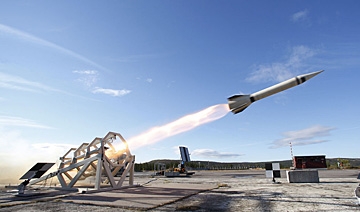
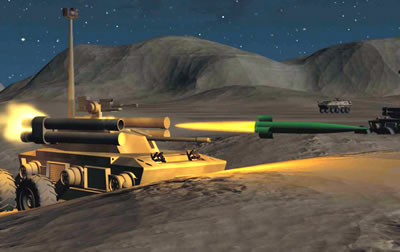
I just had my resume submitted by a shop to ATK, which manufactures thing related to rockets, drones, and small arms, and then I came across the fact that they got a contract for a target drone to simulate the SS-N-27 Sizzler (Novator 34M-54E Klub).

It’s an interesting concept. It’s a two stage cruise missile proceeding at subsonic speeds for most of its flight path, but about 20-30 miles from the target, the second stages fires and it accelerates to somewhere around mach 2.9 for the final flight to target.

You end up with a supersonic approach just as it goes over the horizon, but the total package is much smaller, or the range is much greater, than something that would be supersonic along the complete flight path.

ATK’s job may actually be more difficult than making the weapon, as one would assume that you would want the possibility of recovery for the drone, at least when the defenders get it wrong in practice.

It’s called the Multi-Stage Supersonic Target (MSST).

Basically, you have a subsonic bus which carries the whole assembly, and the supersonic portion, based on the GQM-163 Coyote supersonic target drone is hung from a strongback.

Full disclosure: They have my resume in their hands right now, at least that’s what the shop told me.

Turkey to Buy Russian SAMs

It appears ht they will be plunking down about $100 million for, “ SA 10 Grumble, SA-12b Giant and SA-15 Gauntlet missiles from Belarus and Ukraine, so that they can practice counter measures against the Russian double digit SAMs.

This is separate from the $4 billion bid they have out for long range SAMs for use by the military in operations, which has the US Patriot competing with the Chinese HQ-9, Israeli Arrow, and Russian S-400.

I love this quote from the article:

The United States has raised concerns that if NATO-member Turkey were to purchase Russian missiles it would create an inter-operability problem with NATO.

Because, I guess, US operators using Patriot missiles are more than capable of shooting down an RAF Tornado during the invasion of Iraq.

While all militaries support their national defense industries, the degree to which the US does is particularly whorish.

IAF Adds Electro-Optical Target ID to Patriot SAM

The Israelis Air Force is integrating a sytstem that they call Sniper to their Patriot SAM batteries.*

The rules of engagement that the IDF uses requires positive visual engagement, something, no doubt, that the RAF Tornado crew shot down during the invasion of Iraq would have appreciated, and this system allows for a positive ID out to the maximum range of the missile.

*Unlike most other services where SAMS are assigned to the army, typically a part of artillery, the Israelis give their air force ownership of their SAMs, on the theory that they have a better idea of who are the good guys and who are the bad guys flying around.

Indian BVR Missile

India is developing a beyond visual range air to air missile called the Astra (Paid Subscription Required).

Considering the record of the Defense Research Development Organization (DRDO), my daughter, now 11, will be out of college before they get to final testing.

The missile looks rather similar to the French Super 530 missile, which the Indian Air Force operates, or at least did operate, though at 160kg, it’s about 60% of the weight of the Super 530, which clocks in at 275 kilos.

Seriously, the Indian Defense Establishment is the Most Fracked Up Military-Industrial Complex on the Face of the Earth

I just saw this press release from the Indian government about the Nag anti-tank missile.

It’s supposedly a “third generation anti-tank missile”, and it’s supposed to undergo final trials in the next week or so, but the missile has been 22 years in development.

22 years? For an anti-tank missile?

That is completely whack, and once again the initials DRDO (Defence Research and Development Organization), a government agency and defense contractor, which figures prominently in this absurdity.

Perhaps, shuttering the organization, bulldozing the buildings, burning the rubble, encapsulating the ashes in concrete, and starting afresh in establishing an indigenous defense establishment would help, because, based on the performance that I’ve seen, this is the most screwed up defense procurement establishment in the world.

China Closing In On Anti-Ship Ballistic Missile

It’s derived from their CSS-5 intermediate range missile and uses technology similar to that of the Pershing II, which had a CEP in the single digit meter range.

The current version has a range around 1800 km and a nuclear warhead that weighs around 600 kg. I imagine an anti-ship (carrier killer) version would have a similar range and a similar weight warhead.

In any case if one of these hits a flight deck at mach 4 or so, the warhead is guilding the lily.

If at First You Don’t Succeed, Hire Retired Generals

Lockheed-Martin, the manufacturer of the “troubled” Joint Air to Surface Standoff Missile (JASSM) has recieved authoriziation from the DoD to proceed on development and production.

It should have been canceled long ago. Not only are there other systems that do much the same thing, MBDA Storm Shadow or Taurus KEPD 350 come to mind, but the missile has escalated in cost beyond reason while showing real reliability problems.

We have yet another case of a defense contractor failing upward.

Successful Test of Meteor Breathing Air to Air Missile

On the 6th of this month, at the Vidsel Missile Test Range in Sweden.

It’s generally in the AMRAAM range of performance, though it offers significantly better kinematics (Range 100+km reported on the wiki, and I’d bet on more than 150km) due to its solid fuel ramget/ducted rocket propulsion system.

Of note, it will
never fit in an F-22 weapon’s bays, though it might fit in those of an F-35.

It’s supposed to enter service in about 5 years….Yeah…I know…what takes so %$#@ing long.

Army and Navy Agree to Fight Sensible Procurement Policies

As I discussed last week, the military does not like the idea of competing prototypes for weapons systems (Paid subscription required), and they are opposing this on the Joint Air-Ground Munition (JAGM) Contract.

They are claiming that it will cost an additional $1.5 billion dollars, but what it really comes down to is that it removes the opportunity to gold plate the system, and hence gold plate their retirement gigs, through changes in requirements after a winner is selected.

Further Indian Problems With Russian Arms Deals

While the Indian military has had a long history of using Soviet, and later Russian weapons systems, on the naval side things have been strained lately, with delays, under-performance, and cost overruns being the rule rather than the exception, with the Admiral Gorshokov/Vikramaditya fiasco being most prominent.

Now the Indian Navy has
rejected the recently upgraded Kilo class submarines.

This appears to have been driven by integration issues with the Klub-S 3M-54E1 (SS-N-27 Sizzler) anti-ship/land attack missiles, which failed to strike the targets in tests.

I’m not sure if this will effect the massive medium fighter buy planned by the Indian AF, as the problems at this point seem to be limited to naval equipment.

New Chinese Short Range AAM

Ares recently posted a description of a new Chinese short range air-to-air missile.

Seeing as how I actually spent some time working in rockets and missiles (SAMs mostly) I though I’d look at their thoughts and add a few of my own:

First, the missile clearly has thrust vectoring, but it does not have any forward fins. These seem to run counter to each other.

A missile lacking forward fins typically has better long range kinematics (the ASRAAM, for example actually has beyond visual range capabilities), but the thrust vectoring shows a bias toward shorter engagement distances.

It should be noted that the fore body strakes probably contribute a quite bit to aerodynamic maneuverability, particularly at high speeds (you will note that the ASRAMM below lacks them)

The rocket motor is almost certainly relatively low thrust at launch, to allow for the vectoring paddles to work with relatively small actuators (the AIM-9X does not do this, but it is reusing an old motor). Additionally, since the thrust vectoring has little benefit at higher speeds, where aerodynamics work better, it’s likely that they are jettisoned shortly thereafter in flight.

The report states that the missile is an Imaging Infra Red system, and my guess would be that uses a scanning array, rather than a staring array (go to the Wiki link, it explains the difference fully). While there are applications where a staring array is crucial, such as astronomical devices, for AAMs, the advantages are in dispute, staring arrays are much more difficult to manufacture.

One possibility is that this is the product of South African and Chinese cooperation though, it looks a lot like the Denel A-Darter (see below). Note that the A-Darter has a 6″ diameter (166mm) as compared to the 5 inches of the Sidewinder, which implies superior kinematics because of greater fuel volume).

Adventures in Bad Desense Technology Reporting

I’ve seen the story all over the net about successful Russian test launch of the RSM-54, or Sineva from the Tula, Delta IV class submarine earlier this month.

There was much talk about it was a “hybrid ballistic missile that in its final stages becomes a modified cruise missile” is actually a bit of a misnomer.

…., is a hybrid ballistic missile that in its final stages becomes a modified cruise missile. In this guise, the warhead cannot be targeted by anti-missile systems that rely on a ballistic trajectory for their calculations.

This is a misnomer. What we have is called a “MARV”, MAneuverable Reentry Vehicle, and it is fairly old news.

The Pershing II which actually reached deployment in the 1980s in Europe before being retired under the INF treaty had such a system, though not for ABM evasion, they coupled it with a terminal radar for a CEP under 30 meters.

For a strategic system it would likely be used for evasion, and there are reports of it being used on the Trident reentry vehicles.

You can see see the aerodynamic surfaces, and the radome on this picture of a Pershing II launch from Wiki.

Swedish Company Tests Hyper Velocity Missile

It’s supposed to be able to achieve Mach 5.5 at sea level, that’s about 4200 miles per hour.


The article makes the suggestion that this might have been designed to be used with a multi transmitter anti-stealth radar system. Basically, you would target the missile on coordinates, and have no terminal guidance, so a shorter flight time would reduce error from the target changing course.

It would also be a potent anti-tank weapon, relying on kinetic energy for a kill, but it does appear to be a bit large for that application, as the 45 kg CKEM and 5 foot long(see picture below) can destroy any known armored vehicle.

The Saab-Bofors vehicle appears to be at least twice that size.

Rare Glimpse Of Russia’s Future Cruise Missile

This is the new Russian cruise missile, the Kh-101/102.
According to Aviation Week (paid subscription required) this is to have a roughly 5000km (3000 mi) range and a small radar cross section.

This compares favorably to the current Kh-55, a non stealthy design with a shorter range (2550 km) and smaller size (6m vs 8m).

On the bottom, about halfway down, appears to be a chin mounted air intake, though this might be some sort of EO sensor, as the -101 version is conventionally armed, and hence needs more precise targeting.

It can be carried internally on the Tu-160 Blackjack, and externally on the TU-95 Bear.

The Sordid Tale of the JASSM is now Well into the Twilight Zone

You know the deal. The missile’s unit cost has doubled from about $400K t about 800K, and it has a 42% failure rate. There are suggestions that it be replaced by equivalent european systems, like the the MBDA Storm Shadow or Taurus KEPD 350.

Congress and the military have not yet done this out of concern for pork and lucrative consulting gigs industrial base.

Well, now we have Boeing calling for it to get the opportunity to manufacture it, because they can do better than Lockheed.

It certainly would be hard for them to do worse.

AIM-9X Is Not All It’s Cracked up To Be

Physics says that the AIM-9X will have inferior kinematics (speed and range) and a smaller warhead than its competitor.

The AIM-9 is a 125mm (5″) diameter missile, while its competitors, the ASRAAM, Python 5, IRIS-T (I think), R-73 (AA-11), MICA, are all 150 mm+ (6+ inches), giving more than 40% internal volume.

This means more fuel and a larger warhead.

Additionally, when compared to the other thrust vectoring missiles, which have new motors which provide less thrust during the early thrust vectoring stages, and hence less thrust vectoring losses, the motor is less efficient.

There is also the argument that with an agile airframe, and a seeker that has a wide scan angle, you can get the same effects, which is what the Python 5’s game, and/or using the capability of locking on after launch (ASRAAM largely operates in this mode) to achieve similar targeting, because all these missiles require that the platform pass pretty detailed information on the target, typically with a helmet mounted sight, to the missile in order to engage off boresight targets.

None of the larger missiles even fit in the F-22 side bays for IR missiles, and once one is in a visual encounter, the F-22 has lost a its advantages of stealth and super cruise, so the USAF probably sees this as a weapon of last resort (the cannon is more for that random enemy truck convoy that happens by).

That being said, this is a neat video.