Category: Communications

The FCC Gets one Right, Big

The FCC has issued a temporary rule forbidding the extortionist phone rates charged to prisoners and their families:

Today was an extremely emotional meeting at the Federal Communications Commission (FCC). After ten years of fighting, the FCC resolved the Petition filed by Martha Wright and concluded that the rates charged for prisoners to make and receive phone calls are “unjust and unreasonable” and therefore violate Section 201 of the Communications Act. The FCC imposed interim rates and issued a further Notice of Proposed Rulemaking to ensure that rates going forward are based on actual cost to provide service, not jacked up outrageously because prisoners and their families have no choice. Importantly, the FCC ruled that the “commissions” (aka kickbacks) paid to jails for the right to exploit the helpless and profit from the misery of their families are not a “cost” that can be recovered. (FCC press release here.)

This is a repulsive practice.

Not only was it creating a literally captive customer base for these obscene rates, it also had the effect of increasing recidivism, and impoverishing the families of prisoners.

The NSA Spying Gets Worse

Now we have XKeyscore, which “collects ‘nearly everything a user does on the internet’.”

A top secret National Security Agency program allows analysts to search with no prior authorization through vast databases containing emails, online chats and the browsing histories of millions of individuals, according to documents provided by whistleblower Edward Snowden.

The NSA boasts in training materials that the program, called XKeyscore, is its “widest-reaching” system for developing intelligence from the internet.

The latest revelations will add to the intense public and congressional debate around the extent of NSA surveillance programs. They come as senior intelligence officials testify to the Senate judiciary committee on Wednesday, releasing classified documents in response to the Guardian’s earlier stories on bulk collection of phone records and Fisa surveillance court oversight.

………

The files shed light on one of Snowden’s most controversial statements, made in his first video interview published by the Guardian on June 10.

“I, sitting at my desk,” said Snowden, could “wiretap anyone, from you or your accountant, to a federal judge or even the president, if I had a personal email”.

US officials vehemently denied this specific claim. Mike Rogers, the Republican chairman of the House intelligence committee, said of Snowden’s assertion: “He’s lying. It’s impossible for him to do what he was saying he could do.”

But training materials for XKeyscore detail how analysts can use it and other systems to mine enormous agency databases by filling in a simple on-screen form giving only a broad justification for the search. The request is not reviewed by a court or any NSA personnel before it is processed.

So, either Rep. Rogers knowingly lied, or he was lied to by the state security apparatus.

Yeah, it just keeps getting worse, and there is more to come, at least that is what Senator Ron Wyden said yesterday when he said that, “U.S. intelligence agencies’ violations of court orders on surveillance of Americans is worse than the government is letting on,” which means that even with a incredibly compliant FISA Court (You need to keep them away from toilet paper, because they will sign anything), they be bothered to follow the “law”.

An Old Idea Whose Time Has Come Again

The idea that, in addition to having the US Post Office serve our letter carrier needs, that we have them supply basic retail banking services again:

On July 27, 2012, the National Association of Letter Carriers adopted a resolution at their National Convention in Minneapolis to investigate establishing a postal banking system. The resolution noted that expanding postal services and developing new sources of revenue are important to the effort to save the public Post Office and preserve living-wage jobs; that many countries have a successful history of postal banking, including the U.S. itself; and that postal banks could serve the 9 million people who don’t have bank accounts and the 21 million who use usurious check cashers.

The USPS has been self-funded throughout its history, but it has been recently driven to insolvency because in 2006, Congress required it to prefund postal retiree health benefits [3] for 75 years into the future, an onerous burden no other public or private company is required to carry. The USPS has evidently been targeted by a plutocratic Congress bent on destroying the most powerful unions and privatizing all public services, including education. Britain’s 150-year-old postal service is also on the privatization chopping block, and its postal workers have also vowed to fight. Adding banking services is an internationally proven way to maintain post office profitability.

Not only has it been done before, it was done in the United States in my lifetime:

The now-defunct U.S. Postal Savings System was also quite successful in its day. It was set up in 1911 to get money out of hiding, attract the savings of immigrants, provide safe depositories for people who had lost confidence in private banks, and furnish depositories with convenient hours. Deposits ranged from $1 to $2,500, and the postal system paid 2% interest on them. It issued U.S. Postal Savings Bonds that paid annual interest, as well as Postal Savings Certificates and domestic money orders. Postal savings peaked in 1947 at almost $3.4 billion.

The U.S. Postal Savings System was shut down in 1967, not because it was inefficient but because it became unnecessary after its profitability became apparent. Private banks then captured the market, raising their interest rates and offering the same governmental guarantees that the postal savings system had.

This is a good idea for a number of reasons

  • It would allow for an alternative to hit the ground running when (not if) the next time that the big banksters crash and burn.
  • It would allow for small depositors, who routinely take it up the ass from commercial banks, to have an alternative that is also national in scope.
  • It would help the Post Office out of its current Congressionaly generated financial crisis.

In order to take down the banksters, you have to do more than just regulate them: You need to create an effective state owned and operated alternative.

Obama Is Lying About the Prevented Terror Attacks, and Other NSA Scandal Stuff

A review of the claims shows that either ordinary law enforcement actions uncovered the planned attacks, or that there never was a planned attack, there never was an attack:

This suspect, in turn, was in contact with an individual in the United States named Khalid Ouazzani. Thus warned, the FBI investigated Mr. Ouazzani through traditional law enforcement methods, and discovered a burgeoning plot to bomb the NYSE.

“Ouazzani had been providing information and support to this plot,” FBI Deputy Director Sean Joyce told lawmakers.
However, Mr. Ouazzani pleaded guilty to providing material support – in his case, money – to Al Qaeda, not to terror planning. His May 2010 plea agreement makes no mention of anything related to the New York Stock Exchange, or any bomb plot, notes David Kravets in Wired magazine.

Plus, Ouazzani’s defense attorney said Tuesday the stock market allegation was news to him.

“Khalid Ouazzani was not involved in any plot to bomb the New York Stock Exchange,” attorney Robin Fowler told Wired.

As to the New York subway plot, it was discovered not by analysis of vast amounts of Internet data of foreign users, but rather by old-fashioned police work, according to The Guardian, the British newspaper that first published a secret NSA document showing the agency collected phone metadata from Verizon Business Services.
A British intelligence investigation into a suspected terrorist cell in England’s northwest first turned up a crucial e-mail address of a Pakistani extremist, write The Guardian’s Ed Pilkington and Nicholas Watt. They passed this address to the US.

Surveillance of this one address led the US to Najibullah Zazi, an Afghan-American living in Colorado who had asked the Pakistani extremist for explosives recipes. FBI agents followed Mr. Zazi as he traveled to New York. Search warrants turned up bomb components, and in 2010 Zazi confessed to a plot to bomb the city’s subway system with backpacks.

The NSA’s sweeping data interception capability “played a relatively minor role” in breaking this case, write Mr. Pilkington and Mr. Watt.

And the Guardian now hsa published the secret standards used by the NSA, and it appears we have another lie, because the standards do allow for emails to be read and phone calls to be listened to:(see here and here for the docs)

The Guardian is publishing in full two documents submitted to the secret Foreign Intelligence Surveillance Court (known as the Fisa court), signed by Attorney General Eric Holder and stamped 29 July 2009. They detail the procedures the NSA is required to follow to target “non-US persons” under its foreign intelligence powers and what the agency does to minimize data collected on US citizens and residents in the course of that surveillance.

The documents show that even under authorities governing the collection of foreign intelligence from foreign targets, US communications can still be collected, retained and used.

………
The top secret documents published today detail the circumstances in which data collected on US persons under the foreign intelligence authority must be destroyed, extensive steps analysts must take to try to check targets are outside the US, and reveals how US call records are used to help remove US citizens and residents from data collection.

However, alongside those provisions, the Fisa court-approved policies allow the NSA to:

  • Keep data that could potentially contain details of US persons for up to five years;
  • Retain and make use of “inadvertently acquired” domestic communications if they contain usable intelligence, information on criminal activity, threat of harm to people or property, are encrypted, or are believed to contain any information relevant to cybersecurity;
  • Preserve “foreign intelligence information” contained within attorney-client communications;
  • Access the content of communications gathered from “U.S. based machine[s]” or phone numbers in order to establish if targets are located in the US, for the purposes of ceasing further surveillance.

………

The documents also show that discretion as to who is actually targeted under the NSA’s foreign surveillance powers lies directly with its own analysts, without recourse to courts or superiors – though a percentage of targeting decisions are reviewed by internal audit teams on a regular basis.

………

Those procedures state that the “NSA determines whether a person is a non-United States person reasonably believed to be outside the United States in light of the totality of the circumstances based on the information available with respect to that person, including information concerning the communications facility or facilities used by that person”.

It includes information that the NSA analyst uses to make this determination – including IP addresses, statements made by the potential target, and other information in the NSA databases, which can include public information and data collected by other agencies.

Where the NSA has no specific information on a person’s location, analysts are free to presume they are overseas, the document continues.

“In the absence of specific information regarding whether a target is a United States person,” it states “a person reasonably believed to be located outside the United States or whose location is not known will be presumed to be a non-United States person unless such person can be positively identified as a United States person.”

If it later appears that a target is in fact located in the US, analysts are permitted to look at the content of messages, or listen to phone calls, to establish if this is indeed the case.

Referring to steps taken to prevent intentional collection of telephone content of those inside the US, the document states: “NSA analysts may analyze content for indications that a foreign target has entered or intends to enter the United States. Such content analysis will be conducted according to analytic and intelligence requirements and priorities.

(emphasis mine)

Translated from the bureaucratese, this is unlimited ability to record phone calls and emails, until it is proven that they are not in the United States, and even then, the data is retained.

All that the analyst has to do is to claim that you are “not sure” if the target is a “US Person”, and it’s no harm no foul for intercepting the contents of their communications.

As Glenn Greenwald notes, this is yet more evidence that FISA court oversight is a complete joke.

H/t to Washington’s blog for the links on the NSA false claims.

Why NSA Spying Matters

John Judis was a relatively low level political activist, primarily concerned with the Vietnam war, in the 1960s

Well, he relates the systematic program of surveillance and harassment against him:

President Barack Obama has assured us that we need not be worried about the National Security Agency listening to our phone calls or monitoring our Internet use. The NSA’s programs, he said, represent “modest encroachments on privacy” that are “worth us doing” to protect the country from terrorists. Count me among those who are not reassured by Obama’s statement. I know better—from my schoolboy knowledge of the Constitution and from my own experience during the ’60s with unwarranted government surveillance.

I don’t usually like to base moral judgments on what the Constitution does or does not allow, but in this case, it makes sense to do so. The Constitution had two very different purposes: One was to create a functioning government; the other, forged in the wake of the American revolution, was to establish constraints that would prevent the abuse of state power. The First Amendment was designed to do the latter; and so was the Fourth, which prohibits “unreasonable searches and seizures.” The administration’s obsessive pursuit of press leaks threatens the First Amendment’s freedom of the press; and the NSA’s surveillance violates the Fourth Amendment’s ban on general warrants—on indiscriminate searches without probable cause.

………

I had my own vague vision of what a socialist America would look like, but almost everything that I did was directed at immediate issues like ending the Vietnam War or later impeaching Richard Nixon. I was not a bomb thrower. I advocated running candidates in elections. I taught classes on Marx’s Capital and American history at a school we organized in Oakland. But during this period, I was under almost constant surveillance by the FBI and by other intelligence or police agencies. I received regular visits from the FBI (I told them I wouldn’t talk to them), and they also visited my parents and friends.

As my FBI file, which I later obtained, attested, my movements were being monitored even when I didn’t know it. (Most of it is, unfortunately, blacked out.) In organizing demonstrations, I encountered people who turned out to be government agents. I was pulled over by the police with guns drawn for no apparent reason. And I also received inquiries about my tax returns from the IRS even though I was living on about $3000 a year during much of this period. These inquiries, which to this day may or may not have had something to do with my politics, certainly make me sympathetic to the rightwing groups who were barraged by inquiries from the IRS—whether or not these inquiries were directed by higher-ups in the administration.

………

Obama says that the debate over the NSA’s activities is “healthy for our democracy” and a “sign of maturity.” But I think it’s a sign of forgetfulness—of Constitutional amnesia—on the part of Obama and his Attorney General Eric Holder, not to mention the administration’s vaunted intelligence chiefs who want to divert attention from the subject of the leaks, which is their own behavior, onto the leaker. I am hoping Democrats as well as Republicans in Congress remind the administration what the Constitution was designed to do and what the original FISA legislation was meant to do, but judging from the performance of most congressional leaders so far, I am not holding my breath.

When people (like the contemptible Lawrence O’Donnell* this evening) say that they “feel safer” because they are much less likely to be observed in the vast morass of data, they do no not get it.

The question is what happens with all that information when someone in power, whether it be the President of the United States, or minor data entry clerk like Edward Snowden, or a law enforcement official like J. Edgar Hoover decides to make you their business.

You do not get lost in the haystack when they decide to come for you.

That’s why we have a 4th amendment.

*Seriously, he is so in the tank for Obama that he would endorse an order from Obama for O’Donnell’s own execution.

We Have a Name for the Hero

The NSA leaker is Edward Snowden, who is now in hiding in Hong Kong:

The individual responsible for one of the most significant leaks in US political history is Edward Snowden, a 29-year-old former technical assistant for the CIA and current employee of the defence contractor Booz Allen Hamilton. Snowden has been working at the National Security Agency for the last four years as an employee of various outside contractors, including Booz Allen and Dell.

The Guardian, after several days of interviews, is revealing his identity at his request. From the moment he decided to disclose numerous top-secret documents to the public, he was determined not to opt for the protection of anonymity. “I have no intention of hiding who I am because I know I have done nothing wrong,” he said.

Snowden will go down in history as one of America’s most consequential whistleblowers, alongside Daniel Ellsberg and Bradley Manning. He is responsible for handing over material from one of the world’s most secretive organisations – the NSA.

In a note accompanying the first set of documents he provided, he wrote: “I understand that I will be made to suffer for my actions,” but “I will be satisfied if the federation of secret law, unequal pardon and irresistible executive powers that rule the world that I love are revealed even for an instant.”

………

He has had “a very comfortable life” that included a salary of roughly $200,000, a girlfriend with whom he shared a home in Hawaii, a stable career, and a family he loves. “I’m willing to sacrifice all of that because I can’t in good conscience allow the US government to destroy privacy, internet freedom and basic liberties for people around the world with this massive surveillance machine they’re secretly building.”

………

Having watched the Obama administration prosecute whistleblowers at a historically unprecedented rate, he fully expects the US government to attempt to use all its weight to punish him. “I am not afraid,” he said calmly, “because this is the choice I’ve made.”

He predicts the government will launch an investigation and “say I have broken the Espionage Act and helped our enemies, but that can be used against anyone who points out how massive and invasive the system has become”.

………

He left the CIA in 2009 in order to take his first job working for a private contractor that assigned him to a functioning NSA facility, stationed on a military base in Japan. It was then, he said, that he “watched as Obama advanced the very policies that I thought would be reined in”, and as a result, “I got hardened.”

The primary lesson from this experience was that “you can’t wait around for someone else to act. I had been looking for leaders, but I realised that leadership is about being the first to act.”

They are going to try to destroy him, of course.

Note also that he wasn’t working for the NSA, he was a contractor at Booz Allen Hamilton. That means that information about this program was spread among dozens of entities (Booz Allen Hamilton was almost certainly one of many contractors), which means that any decent intelligence gathering operation, whether it be Russia, China, or a dude with Google and Lexis-Nexis would know about this.

It’s clear that this secrecy was not about concealing this from potential rivals or adversaries, but rather its goal was to conceal this from the American public.

Click for full size


Clapper Said No US Surveillance, but the US Ain’t Green

BTW, the Guardian has also revealed information about the global data mining operation, called Boundless Informant:

The National Security Agency has developed a powerful tool for recording and analysing where its intelligence comes from, raising questions about its repeated assurances to Congress that it cannot keep track of all the surveillance it performs on American communications.

The Guardian has acquired top-secret documents about the NSA datamining tool, called Boundless Informant, that details and even maps by country the voluminous amount of information it collects from computer and telephone networks.

………

At a hearing of the Senate intelligence committee In March this year, Democratic senator Ron Wyden asked James Clapper, the director of national intelligence: “Does the NSA collect any type of data at all on millions or hundreds of millions of Americans?”

“No sir,” replied Clapper.

Judith Emmel, an NSA spokeswoman, told the Guardian in a response to the latest disclosures: “NSA has consistently reported – including to Congress – that we do not have the ability to determine with certainty the identity or location of all communicants within a given communication. That remains the case.”

The US ain’t green, the lowest level of surveillance, and James Clapper perjured himself before Congress, but there will be no consequences for this.

Meanwhile Congressman Peter King is calling for Snowden’s extradition:

There was no immediate reaction from the White House but Peter King, the chairman of the House homeland security subcommittee, called for Snowden’s extradition from Hong Kong. Snowden flew there 10 days ago to disclose top-secret documents and to give interviews to the Guardian.

“If Edward Snowden did in fact leak the NSA data as he claims, the United States government must prosecute him to the fullest extent of the law and begin extradition proceedings at the earliest date,” King, a New York Republican, said in a written statement. “The United States must make it clear that no country should be granting this individual asylum. This is a matter of extraordinary consequence to American intelligence.”

It should be noted that Peter King openly and aggressively supported the IRA when it was a terrorist organization, and actually planting bombs.

By comparison, Snowden revealed the administration, and government, lies to, and spying on its own citizens.

If Snowden was seeing a psychiatrist, like Daniel Ellsburg, I fully expect Obama to pull out the Nixon playbook and stage a bag operation to steal his records.

Why Does George W. Bush Hate America?

Because that is the only reason that he would approve of his aid threatening to ban William F. Buckley from the radio because he criticized them:

Buried in this op-ed by former Bush speechwriter Matt Lattimer about Margaret Thatcher is this incredibly juicy nugget.

A few years later, when (William F.) Buckley questioned the wisdom of the Iraq war and George W. Bush’s 2008 surge, he was all but drummed out of the conservative movement. “If you had a European prime minister who experienced what we’ve experienced, it would be expected that he would retire or resign,” Buckley once said of Bush. For such apostasies, Bush aides threatened to ban Buckley from the radio airwaves. (I know because I was there.)

(emphasis mine)

These guys sound more like Stalinists every day.

You Phone Company is Refusing to Complete Rural Calls, and Deceiving Us About It

Telcom law maven Harold Feld shows how FCC Loopholes resulting from VOIP exceptions are destroying one of the central requirements of voice calls:

Increasing numbers of rural communities are reporting problems with incoming phone calls. Outgoing calls work fine, but when someone tries to call one of these rural communities from an urban area, the connection doesn’t go through.

Though the phone never rings in the rural community, the urban caller might hear a “false ringback” in his earpiece, inserted so he will think there’s simply no answer and won’t complain about the lack of service.

This “rural call completion” problem, which also includes connections with very bad sound quality, is getting scrutiny from the Federal Communications Commission.
The problem “causes rural businesses to lose customers, cuts families off from their relatives in rural areas, and creates potential for dangerous delays in public safety communications in rural areas,” according to the FCC.

………

In the last several years, businesses called “least cost routing” companies have sprung up. These companies promise phone networks to find the least expensive way to route their phone calls. The phone companies themselves don’t know how the least cost routing companies are routing the phone calls. They just trust them to do it.

Since completing calls to rural areas is expensive, least cost routers generally try to find long, complicated routes that will minimize the termination fees and other charges by making the call look like it comes from someplace with lower fees. This introduces something called “latency.” The lengthy routes mess up the IP-based phone call, causing long breaks in the signal that the traditional phone network (operated by a rural phone company) interprets as dead air or a disconnect.

………

The FCC refuses to classify IP-based services as “telephone” services (although it has the authority to do so). As a result, it can only regulate IP-providers indirectly with something called “ancillary authority.” Whether “ancillary authority” allows the FCC to regulate IP-based providers, such as least cost routers, remains to be seen.

The problem here is one of philosophy: the Washington consensus that deregulation always leads to innovation is a dangerous delusion.

We need only to compare the performance of our lightly regulated telcos to those of more highly regulated places like, Japan, France, or Korea, to see that consumers pay more, and get less, both in terms of performance and reliability.

Deregulation makes it easier to collect monopoly rents, and it is easier, and more lucrative to seek those rents than it is to succeed for innovation or evolutionary product improvement.

Every one gets screwed but the incumbent phone and cable companies, and it strangles real innovation.

5 Principals for Modern Communications Technology

Harold Feld, Senior Vice President of Public Knowledge, telco policy wonk extraordinaire, and friend with whom I do medieval recreation with, has a must read essay on what a modern IP based telephone system should be like.

Basically, and unsurprisingly, it comes down to the same 5 principals that current switch based phone system has:

  • Universal service for all Americans. (Lifeline service for the poor)
  • Guaranteed interconnection, so that a Verizon user can make a call to a Comcast user.
  • Meaningful consumer protections. (i.e. “truth in billing”, which is lacking in cell phone service right now)
  • Reliability (4 “9”s of reliability, something that is lacking in cell phone service right now, as well as various IP telephony services like AT&T’s UVerse)
  • Emergency calls that work. (911 standards)

As is clear to anyone who spent even a few years under Ma Bell, these are not new concepts.  Our phone system has run under this for the past 80 years, since the New Deal.

Unfortunately, with the urging of what I call the “free market mousketeers”, these principals have been slowly been rolled back, and this is not a good thing, as the people and first responders who were left without communications following super-storm Sandy can attest to.

As Mr. Feld notes, the real solutions to many of these problems is to separate the service (voice telephone) from the underlying technology (PSTN vs. IP, or whatever might succeed IP) from a regulatory perspective.

Watch the video.  It is both clear, and does a good job of making what is ordinarily a very dry subject accessible.

Good

Jenny McCarthy has been has been dropped from a cancer fundraiser because of her anti-vaccine bullsh%$:

The Ottawa Cancer Foundation has reversed its decision to hire actress and model Jenny McCarthy to headline its one-day fitness fundraiser Bust A Move.

In a statement released late Friday afternoon, the foundation said McCarthy would be replaced by Canadian celebrity fitness instructor and former CFL player Tommy Europe.

The statement said that since the announcement of McCarthy’s appearance, “…attention has shifted away from breast cancer awareness and fundraising.”

On Tuesday, McCarthy was revealed as Bust A Move’s guest fitness instructor, which caused many to question why an organization supporting cancer research would invite someone with a history of promoting erroneous ideas about health and disease.

Despite reams of scientific research to the contrary, McCarthy writes and speaks publicly about the supposed link between child vaccination and autism. The former Playboy Playmate also blames her son’s autism on vaccinations.

Word of McCarthy’s appearance at a charity cancer event sparked a #dropjenny hashtag on Twitter, which generated many comments about whether the actress was a credible choice. Similar online debate occurred on Bust A Move’s Facebook page.

I’m not saying that Jenny McCarthy should not be able to work because of her beliefs, but allowing her to be a spokesperson for anything remotely medical is like having António Egas Moniz (the inventor of the prefrontal lobotomy) as a spokesman for psychological counseling.

I Can’t F%$#ing Believe that I Said That to My Daughter

It happened twice in a 24 hour period.

In the 2nd, and somewhat less alarming case, I was driving Natalie to an outing at the mall with her friends, and she needed some money, and I knew that she had money in her cash account, but I was not sure that I needed to go to an ATM, so I handed her my wallet, and asked her to count the cash in it.

And then it hit me, I just asked my teenage daughter to go through my wallet and count my cash.

Whiskey Tango Foxtrot? I handed my daughter my wallet, and I told her to count my money?!?!?

In the 1st instance, we were talking about relationships, and boys, and texting, and we were talking about how some of the kids in her school were making “impolitic” posts to their significant others.

I was trying to impress upon her that “sexting” was a really bad idea, because you never know when pictures like this will end up.

I ended my comments with the statement that, “If she wants to show her breasts to a boyfriend, she should do it in person, and not with a cell phone picture.”

And she looked at me.

And my wife looked at me.

And my son looked at me.

And I realized what I said, and, as a result, I probably looked like a cow that had just stepped on its own udder.

I am so not going to get a trophy for parent of the year.

Big Brother is Arlington Hewes*

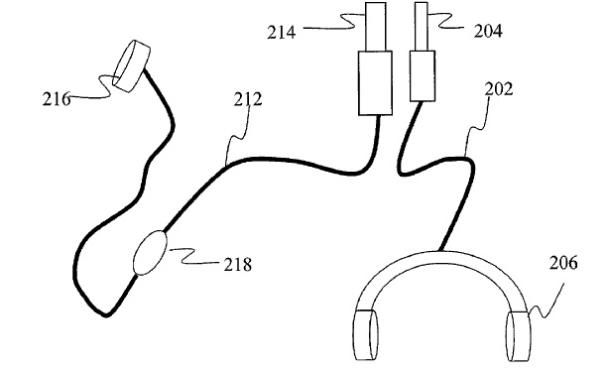
Verizon has just patented a set top box with cameras that spy on you so that they can serve up targeted ads:

Verizon has filed a patent for a DVR that can watch and listen to the goings-on in your living room. In the application, the company proposes to use the technology to serve targeted ads appropriate to whatever you’re doing in the, uh, privacy of your own home—fighting, cuddling, or hanging out with your cats.

Verizon is far from the first company to think of this unassailably creepy use for a set-top box. Comcast patented similar monitoring technology in 2008 for recommending content based on people it recognizes in the room; Google proposed yet another patent for Google TV that would use audio and video recorders to figure out how many people in a room are watching the current broad

I am appalled by the very concept, and I am also appalled by the fact that the USPTO granted a patent for a television that spies on you, when George Orwell published this idea in his novel Nineteen Eighty-Four published in 1949.

The estate of Eric Arthur Blair should sue.

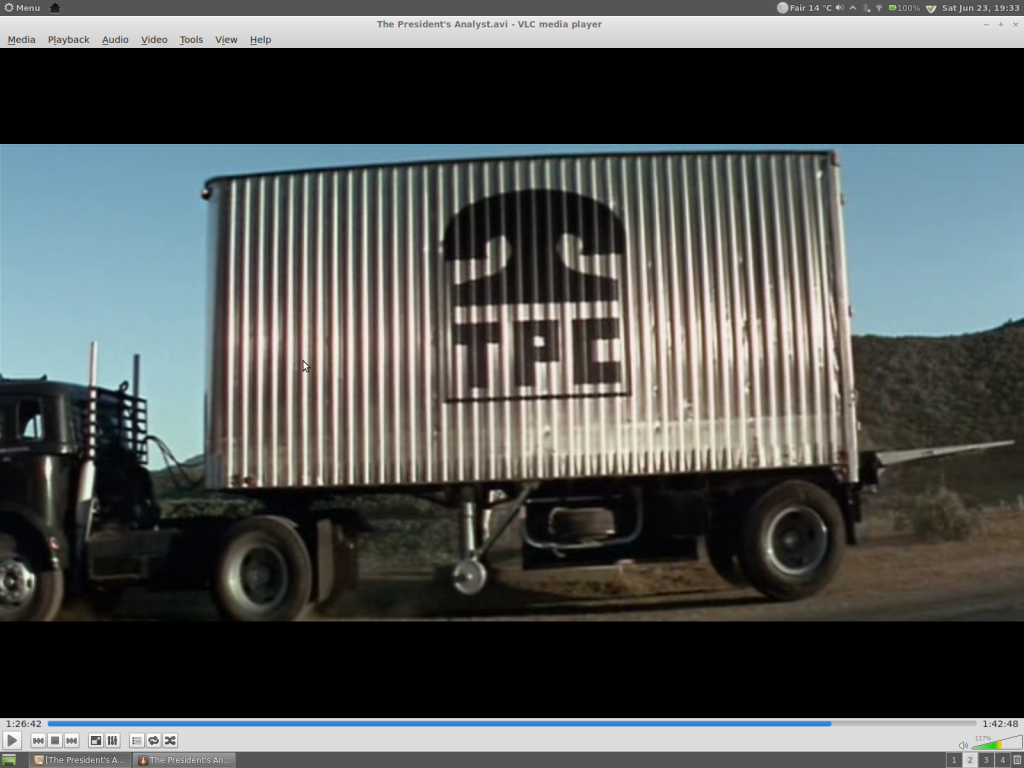
*The President’s Analyst, James Coburn, Godfrey Cambridge, 1967. Arlington Hewes is the president of The Phone Company, which is involved in an evil conspiracy.

Gee, What a Surprise, Regulation Encouraged Cell Phone Companies’ Investments

Last year, the government blocked the merger of AT&T and T-Mobile, and the free-market mousketeers said that it was going to kill private sector investment.

Well, not so much:

Last year, the regulatory agencies charged with overseeing the wireless communications market did something unusual: they actually regulated. After spending the Bush years eagerly facilitating the consolidation of the wireless market, in 2011 the FCC and the Justice Department blocked AT&T from merging with T-Mobile over fears that the deal would be anti-competitive and result in job losses. At the time, conservatives in the media decried this move as gross overregulation of a burgeoning market that would dampen investment and stifle technological development. But here we are almost one year out, and those dire prognostications haven’t played out. In fact, quite the opposite has happened.

………

So what’s happened since then? Well, when the AT&T/T-Mobile merger was first announced, T-Mobile’s parent company, Deutsche Telekom, was looking to wash its hands of the U.S. market. But after the merger fell through and AT&T was obligated to fork over $3 billion to T-Mobile along with a sizeable chunk of wireless spectrum, T-Mobile took the money and invested it almost immediately in network modernization. Now Deutsche Telekom — once eager to be done with the U.S. — is moving to acquire low-cost carrier Metro PCS to build out T-Mobile’s high-speed 4G LTE network.

Meanwhile, the Japanese telecommunications firm Softbank is snapping up Sprint Nextel and infusing $8 billion into the wireless carrier, which will be used to build out its own network. Back when people still thought the AT&T/T-Mobile merger was a sure thing, it was assumed that Sprint would have had to merge with Verizon and we’d be left with a wireless duopoly. Now both Sprint and T-Mobile are investing in their own networks and working to emerge as serious competitors.

And what of AT&T? When the company first announced the proposed merger with T-Mobile in March 2011, it made much of the fact that it would “increase AT&T’s infrastructure investment in the U.S. by more than $8 billion over seven years.” Three weeks ago, AT&T bumped up that number significantly, announcing that “it would invest an extra $14 billion to expand its wireless and broadband services over the next three years.” The New York Times reported on November 9 that the decision to boost infrastructure investment “was motivated by AT&T’s failed $39 billion takeover of T-Mobile USA.”

As a rule of thumb, if a free market absolutist says that something is white, bet on black.

I Don’t Know Whether to Feel Schadenfreude, or to be Appalled

I’m not q big fan the USPTO’s tendency to grant a patent to everything these days, and I’m even less of a fan of Apples use of its patent portfolio as an alternative new ideas, but the folks at Cuppertino just got hit with a completely bogus patent claim:

An apparent shell company has filed a $3 million patent infringement lawsuit against Apple for including headphones with its iPhones.

A company called Intelligent Smart Phones Concepts sued Apple last week in U.S. District Court for the Northern District of California, alleging that Apple infringed on U.S. Patent No. 7,373,182. The abstract for “Wireless Mobile Phone Including a Headset” describes an interface that allows a removable headset “to receive at least telephony audio signals from the phone, and to provide audio signals to the phone.”

Seriously, keep patent examiners away from toilet paper, because they will sign off on anything.

Telco Breakup Has Hit the Mainstream

Because it’s hit the New York Times:

Since 1974, when the Justice Department sued to break up the Ma Bell phone monopoly, Americans have been told that competition in telecommunications would produce innovation, better service and lower prices.

What we’ve witnessed instead is low-quality service and prices that are higher than a truly competitive market would bring.

After a brief fling with competition, ownership has reconcentrated into a stodgy duopoly of Bell Twins — AT&T and Verizon. Now, thanks to new government rules, each in effect has become the leader of its own cartel.

The AT&T-DirectTV and Verizon-Bright House-Cox-Comcast-TimeWarner behemoths market what are known as “quad plays”: the phone companies sell mobile services jointly with the “triple play” of Internet, telephone and television connections, which are often provided by supposedly competing cable and satellite companies. And because AT&T’s and Verizon’s own land-based services operate mostly in discrete geographic markets, each cartel rules its domain as a near monopoly.

The result of having such sweeping control of the communications terrain, naturally, is that there is little incentive for either player to lower prices, make improvements to service or significantly invest in new technologies and infrastructure. And that, in turn, leaves American consumers with a major disadvantage compared with their counterparts in the rest of the world.

On average, for instance, a triple-play package that bundles Internet, telephone and television sells for $160 a month with taxes. In France the equivalent costs just $38. For that low price the French also get long distance to 70 foreign countries, not merely one; worldwide television, not just domestic; and an Internet that’s 20 times faster uploading data and 10 times faster downloading it.

It’s not from their editorial board, it’s from former Times correspondent David Cay Johnston, whose beat is consumer protection and tax loopholes, but the fact that anyone gets space in the “Gray Lady” to suggest that deregulation will not create a telecommunications utopia is worth noting.

They are Still Flying Camberras?

And it appears that they are crucial to the efforts in Afghanistan:

They’re 49 years old, ugly and owned by NASA, not the Pentagon. But two modified WB-57F Canberras are now among America’s most important warplanes. With anonymous-looking white paint jobs, the Canberras have been taking turns deploying to Afghanistan carrying a high-tech new radio translator designed to connect pretty much any fighter, bomber, spy plane and ground radio to, well, pretty much any other fighter, bomber, spy plane and ground radio. That makes the former Air Force reconnaissance planes, originally transferred to the space agency for science missions, essential hubs of the American-led war effort.

With the Battlefield Airborne Communications Node system, or BACN, the WB-57s act as Star Trek-style universal translators, passing data between planes and troops and finally bringing to life the Pentagon’s decades-old dream of speedy, information-propelled, networked warfare. “It orbits high up and basically receives various platforms’ datalink data, then translates all that data and redistributes it in a fused manner back to different platforms in the operating area,” Aviationintel’s Tyler Rogoway told ace aerospace blogger David Cenciotti.

“BACN bridges the gaps,” manufacturer Northrop Grumman boasted.

This is an artifact of how the Pentagon buys stuff.

You see, instead of trying to deal with a serious problem, lack of proper interoperability between systems, they come up with a ridiculously over ambitious system, the now canceled JTRS, that never had a realistic possibility of meeting its overambitious requirements.

So now we are resorting to cobbled together electronics on an airframe that first flew almost 70 years ago.

No Blogging for You!


No Soup For You!

I was unrooting my phone so that I could update, and I forgot to uncheck the “repartition” check box on ODIN, so I wiped my phone.

Thankfully, I regularly backup my contacts, and my web browser, and so it was just a matter of reinstalling the apps, which I had recorded in screen shots for just such an emergency.

Still have to fix the ringtones though.

BTW, I cannot recommend my contacts synching utility MyPhoneExplorer, highly enough. It allows one to sync, contacts, calendar, and notes via USB, Bluetooth, or WiFi. It can work with both its own PIM, or with Outlook, Thunderbird, etc.

The ILECS Suck

Yes, those relics of the Bell Telephone System, the incumbent local exchange carrier are a bunch of pig felching scum, and US telecommunications and data costs and performance will continue to lag behind the rest of the world until they are treated as rent seeking parasites, rather than valued participants in the process.

In the case of Verizon, it now appears that they are deliberately sabotaging its own DSL service and forcing its customers with which it colludes, with the hope that these people will be forced to move to (almost completely unregulated) wireless.

It has the additional “benefit” of moving their business from their unionized land line market to their non-unionized wireless division.

We also have AT&T reporting improved profits by deliberately and aggressively making their product worse:

AT&T reported their second quarter results today. According to this analysis, AT&T achieved better profitability by (a) dramatically limiting their broadband service; (b) discouraging consumers from upgrading their devices; and (c) figuring out new charges for consumers to enhance overall profit per customer.

I get that firms are supposed to maximize profit. But when every single incentive to profit maximization relies on providing less service for more money and discouraging people from using your service, something is seriously messed up. This is doubly true when usual trend in information technology is to drive prices down. And, more tellingly, it creates a real concern if we are relying on market incentives to ensure that providers do things like build out networks and provide us with better service and lower prices.

………

I’d be happy to concede the issue on metred pricing, except that there doesn’t seem to be any actual relationship between the price metering and the cost of provisioning. The idea of metering is that I want to provide you with more capacity because that way I make more profit. If this were bananas, I would have a fairly direct incentive to grow more bananas so I can sell more bananas. But AT&T doesn’t want to charge me for more bandwidth, which would arguably give it incentive to build better systems and sell me ever more capacity. It wants to sell me limited capacity and then stop, presumably so it can capture some imaginary and unspecified revenue on the the other side of the platform. That creates a fairly unfriendly incentive to create scarcity and avoid investment in the network.

It’s what economists call rent seeking behavior, where a company manipulates the social or political environment to extract money, as opposed to doing that icky, “out-competing the competition” thing.